I dream of these violins even in my sleep.
Interviews提琴珍宝馆管理员 May 28, 2026
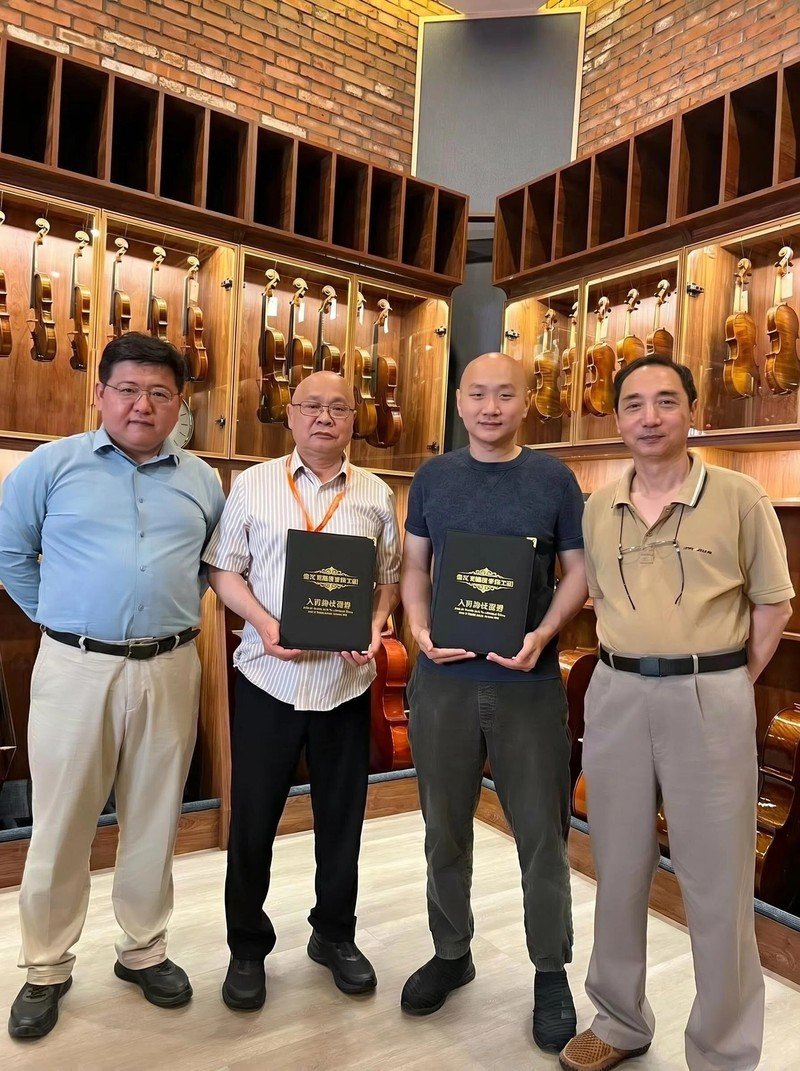
VSA Tone Award winner Liang Zhiling is the first Chinese luthier to receive this honor in the quartet category. He advocates a "free love" wood selection philosophy—arguing that the pairing of the back plate and top plate is more important than the grain pattern, inspired by repeated observations of master violins in Italian museums. His family began repairing violins in Xiguan, Guangzhou in 1935, and the craft has been passed down through four generations—an extremely rare lineage in China's lutherie industry. After his father's health was compromised by long-term inhalation of toxic varnish, he developed an eco-friendly varnish that has passed EU SGS certification, allowing the wood to breathe and enhance sound projection. He confronts a key industry issue: a Chinese-made violin of the same quality sells for 100,000 yuan, while a high-imitation Italian violin sells for 400,000 to 500,000 yuan—China does not lack craftsmanship, but lacks pricing power and a brand system. Violin Temple is establishing circulation records and soundprint archives for resident luthiers, gradually building a valuation system for Chinese makers. His lutherie creed: "To make a great violin, you need to understand sound—but you don't necessarily have to know how to play."