首页/Guides/30% depends on the violin, 70% depends on maintenance.

30% depends on the violin, 70% depends on maintenance.

Guides孙屹巍May 28, 2026
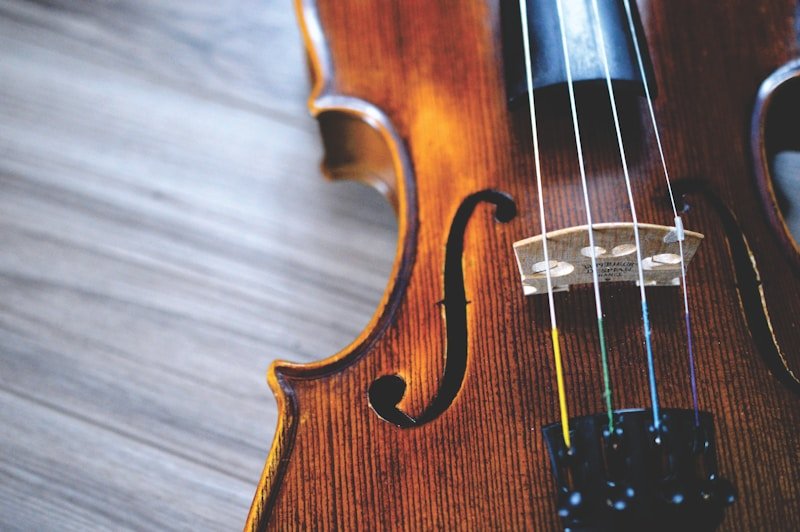
30% depends on the violin, 70% depends on maintenance.

A violin is made of wood—it breathes, expands, and contracts with temperature. A well-maintained instrument sounds better with age, while neglect can cause problems within half a year. Three daily habits: wipe off rosin dust and hand sweat after playing, loosen the bow to prevent warping, and store it in the case to avoid bumps. Temperature and humidity are the first priority: 18–25°C, 40–60% humidity. Humidify in northern winters, dehumidify in southern rainy seasons. More rosin isn't better—just a light dusting on the bow hair is enough. Strings must be changed one at a time; removing all four at once can cause the sound post to fall. A good case is the most cost-effective investment—light, sturdy, and sealed—far cheaper than a single repair. Schedule professional checkups once or twice a year. If the sound post collapses, glue joints open, or the bridge repeatedly tilts, consult a luthier. A 30-second wipe after each practice is far more effective than a year of neglect followed by deep restoration.

**Violin Temple · Bow & Care Guide** 30% the violin, 70% the care The daily essentials and know-how of violin maintenance Choosing the right violin is just the beginning; keeping it well-maintained is the key. I often get asked by parents: "Teacher Tian, what should I pay attention to after buying a violin?" To be honest, this question is more important than "which violin to buy." A well-maintained violin will sound better over time and can even be passed down for decades. A poorly maintained one can develop issues within half a year—warping, glue failure, cracks—costly and time-consuming to repair. A violin is made of wood, and wood breathes, expands, and contracts with temperature and humidity. It’s not an electronic device that stays fine when left unused. On the contrary, a frequently played violin stays in better condition, while one left unplayed and poorly stored deteriorates fastest. This article systematically outlines the core points of daily maintenance. No need to memorize too much—just grasp a few key habits, and your violin will stay in top shape. **Three things to do after each practice session** Don’t underestimate the one or two minutes after playing. Do these three things, and you’ll save half your repair costs. First, wipe the violin. Use a soft, dry cloth—an eyeglass cloth works fine—to gently wipe the body, strings, and fingerboard. Focus on the rosin dust and hand sweat on the fingerboard. If rosin dust isn’t cleaned promptly, it can harden into clumps when exposed to moisture in the air, sticking to the varnish and becoming extremely difficult to remove, while also corroding the varnish and the metal winding of the strings. The G and D strings are most prone to buildup. "Don’t use alcohol, turpentine, or other chemical cleaners to wipe the violin—they’ll damage the varnish. Also avoid vegetable oils, as leftover grease can develop odors over time. For heavier grime, slightly dampen the dry cloth, wring it out, and wipe gently. Don’t leave water droplets on the surface." — Violin Temple Care Advice Second, loosen the bow. After each practice, loosen the bow hair. Bow hair is made of horsehair, and prolonged tension can cause deformation; the bow stick, usually wood, can also warp under constant stress. How loose? Leave enough space for one finger between the bow hair and stick. One more easily overlooked point: don’t touch the bow hair with your hands. Even a trace of oil from your fingers will prevent the hair from holding rosin, causing the bow to slip and making sound production difficult. Third, put it in the case. Place the violin back in its case and fasten the latches. This sounds basic, but I’ve seen too many parents casually leave the violin on a table or music stand, only for it to get bumped or knocked over. Damage from impacts is often irreversible; some cracks require factory repairs, which are time-consuming and expensive. Cultivating the habit of returning the violin to its case after use prevents most accidental damage. Wiping the bow—a fundamental daily care practice **Temperature and humidity—the first line of defense** If you remember only one thing about maintenance, let it be this: temperature and humidity. A violin’s worst enemy is drastic changes in temperature and humidity. The wood used for violins is naturally air-dried for over a decade, with internal stresses largely released. If it repeatedly experiences sharp shifts in temperature and humidity, new stresses can develop, causing warping, glue failure, or even cracks. Ideal storage conditions: 🌡️ Temperature: 18°C – 25°C 💧 Humidity: 40% – 60% In northern winters, indoor heating often drops humidity below 30%, which is especially harmful—causing the top plate to shrink, the fingerboard to sink, varnish to crack, and even strings to snap. The simplest solution: place a hygrometer and a humidifier pack in the case, costing just a few dozen yuan. For those with the means, a room humidifier can maintain stable indoor humidity. In southern rainy seasons, the opposite is true. Excess humidity causes the wood to swell, the body to warp, the bridge to lower, the sound to become muffled, and mold to grow. In this case, place silica gel desiccant in the case and wipe the violin dry after playing. "Good varnish allows the wood to breathe through its pores while providing surface protection. Bad varnish seals the wood like a pot lid." — Violinist Hao Li One often-overlooked detail: don’t leave the violin in a car for long periods. Summer temperatures inside a car can reach 60–70°C, and winter can drop below freezing. Also avoid placing it near air conditioning vents, heaters, or in direct sunlight. Sudden temperature changes are the most dangerous for wood. Constant temperature and humidity storage—a practice used by professional halls, adaptable for home use **Rosin—small item, big knowledge** Many beginners get a new bow, try to play for a while without sound, and blame the violin—when in fact, they just haven’t applied rosin. Rosin’s function is simple: bow hair has tiny barbs, and rosin powder adheres to them, creating enough friction between the hair and strings for the strings to vibrate and produce sound. Without rosin, the hair slips on the strings, and no sound comes out. How to apply rosin to a new bow? For the first use, lightly scrape the surface of the rosin block with a knife or scissors (only the first time), then rub the bow hair back and forth across the rosin 20–30 times to coat it evenly. After that, 5–6 strokes before each practice session are enough. Rosin and the bow—the starting point of playing More rosin isn’t better. Too much makes the sound harsh and creates a cloud of dust; too little causes the bow to slip and the sound to falter. How to judge the right amount? The bow hair should appear slightly white with a thin, powdery layer. When playing, if the bow easily "bites" the strings and the sound is clean and crisp, you’ve got it right. Choosing rosin also matters. Light-colored rosin is harder, suitable for violins and violas; dark-colored rosin is softer and stickier, ideal for cellos and double basses. Climate plays a role too: use dark rosin in dry weather and light rosin in humid weather. At our hall, we recommend Idyllic Symphony premium custom rosin, which is fine-grained and low-dust, suitable for most violin and viola players. **Changing strings—don’t remove them all at once** Strings generally need replacing every 3–6 months, or more frequently for professional players. If a string sounds noticeably dull or loses elasticity, it’s time for a change. The most important rule: change strings one at a time, never all at once. Removing all four strings simultaneously can cause the bridge to fall and the sound post inside the body to shift or even collapse. If the sound post falls, only a professional luthier can reset it—never attempt it yourself. The correct order: start with the outer strings (E and G), then the middle ones (A and D). Tune each string immediately after replacing it before moving to the next. Pegs and strings—change them one by one When tuning, turn the pegs gently and slowly—don’t force them. Sudden tension changes can snap strings or cause pegs to slip. If a peg is stuck or too loose, don’t force it; apply a bit of peg compound (or pencil lead powder) to increase friction. Choosing strings is also an art. At our hall, we offer everything from Opal (¥450) to Larsen Gold Edition Cannon (¥3500), each with distinct tonal characteristics. Simply put: beginners can go with PI100 or DP100 for the best value; advanced players might consider Goldbrokat or Rondo for richer tonal layers. **The case—the violin’s armor** The case is often the most overlooked accessory, but it may be the most cost-effective investment. For a violin worth tens of thousands of yuan, a good case is far cheaper than a single repair. When choosing a case, consider three points: First, shell hardness. Carbon fiber or ABS hard shells are the top choice, offering impact resistance. Fabric bags or foam cases provide little protection—a slip of the handle can ruin the violin. Second, interior fit. A good case has a lining that perfectly matches the violin’s contours, preventing movement inside. If the violin can shift side to side, it’s essentially unprotected. Third, sealing. A well-sealed case effectively isolates the violin from external temperature and humidity changes, creating a microclimate. Jinmali luxury carbon fiber violin case—balancing lightness and protection Our hall primarily recommends Jinmali carbon fiber cases, from the luxury version (¥3600) to the matte finish version (¥3200) and the S7 cello case. Carbon fiber’s advantages are lightness, hardness, and good sealing—30%–50% lighter than traditional wooden cases, with superior protection. **What to do if you won’t play for a long time** Sometimes during holidays or exam seasons, the violin may go untouched for a month or two. Pay attention to this: Loosen the strings by a whole step, but don’t release them completely—too loose, and the bridge may shift or the sound post may fall. Loosen to one note below standard pitch. Ensure the humidity inside the case stays between 40% and 60%. Use a hygrometer to monitor; add a humidifier pack if too dry, or desiccant if too humid. Store the case upright with the lid facing up. Don’t lay it on its side or stack things on top. Avoid placing pencils, music folders, or other items inside the case, as they can bump the violin during transport. Check it periodically. Even if you don’t play, open the case every week or two to inspect the bridge for tilting, check the strings, and look for fine cracks. Early detection means minor fixes; delaying turns small problems into costly ones. **When to see a luthier** Some things you can do yourself; others must be left to professionals. ✅ You can do: wipe the violin, loosen the bow, put it in the case, tune, change strings, humidify/dehumidify ❌ Must see a luthier: sound post collapse, glue failure, persistent bridge tilting, fingerboard warping, neck angle shift It’s recommended to have a professional check-up once or twice a year. A luthier can adjust the sound post position, check for fine glue separation on the top and back plates, calibrate the neck angle, and smooth the fingerboard. These adjustments can affect the tone more than changing strings. Violin Temple offers professional repair and maintenance services, and you’re welcome to bring your violin to our hall for a comprehensive check. Our 640-square-meter professional acoustic showroom, constant-temperature and humidity-controlled collection vault, and resident luthier ensure your violin receives the best care. **Quick reference for common issues** | Issue | Emergency treatment | Send for repair? | |-------|---------------------|------------------| | Bridge tilting | Loosen strings and straighten | If persistent, yes | | Minor glue failure | Avoid vibration, send immediately | Must be professionally repaired | | Sound post collapse | Loosen strings, don’t touch | Urgent repair needed | | String snapping | Replace with spare | If frequent, check | | Bow slipping | Apply rosin; check hair wear | If hair is smooth, replace | | Peg too loose/tight | Apply peg compound or pencil lead | If still problematic, yes | Thirty seconds of wiping after each practice session beats a year of neglect and deep repair. Temperature 20–25°C, humidity 40%–60%, wipe after use, return to case promptly. Follow these, and no matter the price of your violin, it will stay in great condition—sounding better over time and lasting longer. **Violin Temple · Violin Temple Treasure Hall** 640㎡ Professional Acoustic Showroom · Building 6, Beijing Music Industrial Park Appointment for trial: 19910221529 Written by Tian Lifu