首页/Interviews/The Case Is Not an Accessory: A Conversation with Xia Changlin, Head of the Jinmali Carbon Fiber Violin Case Brand

The Case Is Not an Accessory: A Conversation with Xia Changlin, Head of the Jinmali Carbon Fiber Violin Case Brand

Interviews提琴发烧友June 24, 2026
The Case Is Not an Accessory: A Conversation with Xia Changlin, Head of the Jinmali Carbon Fiber Violin Case Brand

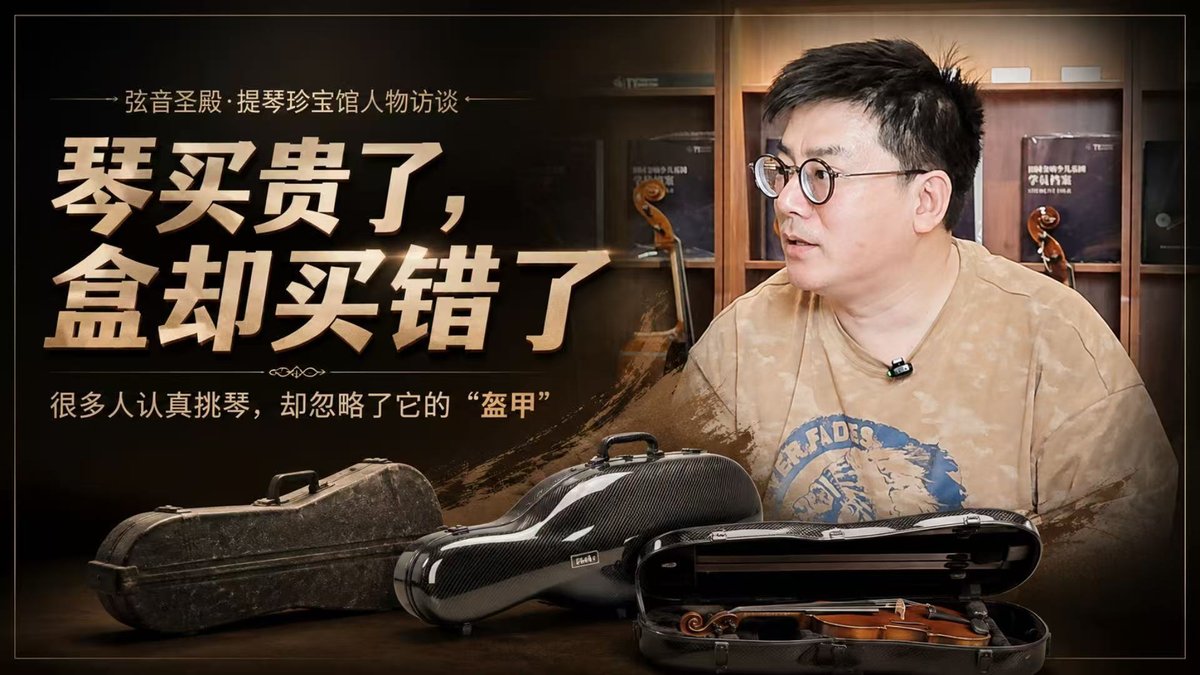
Xia Changlin, head of the Jinmali carbon fiber violin case brand, thoroughly deconstructed this issue in an entire conversation: a violin case is not an accessory—it is the first line of protection for the instrument.

VIOLIN TEMPLE Luthier Collection Idyllic Symphony Series Interview · Episode 3 The Case Is Not an Accessory A Conversation with Xia Changlin, Head of Jinmali Carbon Fiber Case Brand From solid wood to carbon fiber, a century of evolution in case materials—and an overlooked truth: your instrument deserves a better shell. When choosing an instrument, buyers are meticulous and compare endlessly. But when it comes to the case—"Just throw one in." Nine out of ten parents say that. This is the opening gripe of Tian Lifu, curator of Violin Temple, in the third episode of the series interview—and a reality faced by the entire violin industry: in most consumers' eyes, the case is merely a freebie accessory, not worth spending extra on. But that day's guest, Xia Changlin, head of Jinmali carbon fiber case brand, dismantled this notion over the course of a full conversation: the case is not an accessory; it's the instrument's first line of insurance. A Cellist's Necessity, a Violin Parent's Blind Spot Carbon fiber case buyers share a distinct trait—most are cellists. The reason is straightforward: traditional cello cases are bulky and heavy. Foam cases are huge and dent on impact; PC plastic cases often weigh over a dozen jin (6+ kg), heavier than the instrument itself. A carbon fiber cello case weighs only 2.4 to 2.5 kg—about the same as a violin case in hand. For cellists hauling their instrument on subways and rushing to rehearsals, this isn't an improvement—it's a necessity. Xia Changlin lifted a carbon fiber cello case on site; Tian Lifu hefted it: "Feels like a violin case." The 500-gram difference is barely noticeable on such a large piece of equipment. For violins, it's a different story. A carbon fiber violin case weighs 1.6 to 1.7 kg, only 400–500 grams lighter than a standard foam case. "Unless you compare carefully, you barely feel it." So violin parents generally think, "A case is a case—just give me one for free"—until the instrument falls, the back plate gets a hole, and they realize that "free case" was useless. Tian Lifu: "Many parents get a foam case with their instrument. Kids are active, and they come in for repairs—back plate with a hole. A hard case is actually a necessity, but many parents don't have that concept." "I Don't Care About Protection; I Want It to Look Good" One interesting detail from the interview: many professional players prioritize appearance over protection when buying a carbon fiber case. Xia Changlin: "Many of my friends who use cases have said the most classic thing to me—'Don't talk to me about protection. I just want it to look good. I need it to match my outfit.' That's a huge part of the demand. So we release new colors every year to match various styles. This demand mainly comes from adult 4/4 players, and it's not limited to young teachers. Many retired-age teachers also prefer refined cases—they don't want to show up at an event with 20 or 30 people all carrying the same thing. 'Unbearable,' they say. 'I want something with my personality.'" This might sound like consumerist vanity, but Xia Changlin sees deeper: the case is the instrument's face. A good case paired with a good instrument—the ritual of taking it out is itself part of a professional attitude. A Century of Evolution in Case Materials Xia Changlin systematically traced the evolution of case materials in the interview, from solid wood to carbon fiber. Each iteration brings us closer to the core challenge: "light yet strong." Solid wood: The earliest can be traced back to Gewa's solid wood nailed cello case—sturdy, but absurdly heavy. The German headquarters still keeps that "artifact." Plywood: Covered with leather or fabric, a cello case starts at 5–6 kg, completely incompatible with lightness. Fiberglass: Harder than plywood, but with the most issues—soft, heavy, complex manufacturing (more paint coats than carbon fiber), and critically, health hazards for workers: under sunlight, the workshop is filled with floating fiberglass fibers. "Domestically, almost no one makes these anymore." PC plastic: Good toughness but insufficient rigidity, so PC cases are typically thickened or reinforced with ribs. Using a single material means adding thickness to compensate for strength. Composite: Upper and lower PC layers with an insulating core—increases hardness and provides excellent temperature and humidity insulation, with the thickest part reaching 1 cm. Especially suitable for cold northern regions—a client from Harbin recently sought out the composite insulated version. Carbon fiber: Light and strong—that's the entire reason carbon fiber exists for cases. The same process as aircraft wings: upper and lower carbon fiber layers with an insulating reinforcing core, a sandwich structure, molded. From start to delivery, a single case takes at least 20 days. Carbon Fiber 101: The Same Process as Aircraft Wings Many people's first reaction: Isn't carbon fiber used in race cars, airplanes, and high-speed trains? Isn't a carbon fiber case a bit extravagant? Xia Changlin's answer was direct: "The process for our Jinmali carbon fiber cases is the same as for aircraft wings." One layer of carbon fiber on top, one on the bottom, with an insulating reinforcing core in between—a sandwich structure. Carbon fiber also has an insulating layer, but it can't be too thick, because the core purpose of using carbon fiber for cases is to be light and strong. Adding weight defeats the purpose. Unlike the barrel structure of carbon fiber bicycle frames, cases have irregular curved surfaces, formed by mold pressing, then painted and assembled. From layup to delivery, "with no delays and no painting mistakes, at least 20 days." Material Weight (Cello Case) Protection Insulation Foam Light Weak, dents on impact Poor PC Plastic Moderately heavy Good toughness but insufficient rigidity Average Composite Medium Good, reinforced with filler Excellent (up to 1 cm thick) Carbon Fiber 2.4–2.5 kg Extremely hard, sandwich structure Good (thin insulating layer) The Case's Job Is to Protect the Instrument, Not Itself At the end of the interview, Xia Changlin said something simple but spot-on: Xia Changlin: "Nothing in the world is indestructible. The case's job is to protect the instrument—even if the case gets smashed to pieces, if the instrument inside is intact, that case is amazing. A carbon fiber case isn't unbreakable; it's that when it breaks, the instrument survives." This is the fundamental difference between a hard case and a soft bag or foam case: the former takes the damage for the instrument; the latter just gives it a layer of clothing. For families with students, a handmade instrument costs tens of thousands or even over a hundred thousand yuan. Pairing it with a foam case worth a few hundred yuan is like buying the cheapest insurance for a good car—you think you're saving money, but when an accident happens, you realize you didn't save money; you saved safety. Cellists figured this out long ago. Violin parents may still need a "back plate with a hole" lesson to wake up. A good instrument deserves a good case. It's not a luxury; it's a duty. Jinmali carbon fiber cases are now available at Violin Temple · Treasure Hall. Welcome to visit and experience. Inquiry & Consultation Phone: +86 19910221529 Email: fredtaylor@coze.email Address: Building 6, Music Industrial Park, Chaoyang District, Beijing violintemple.com Violin Temple · Treasure Hall | violintemple.com