弦音圣殿弦音圣殿
HomeCollectionFine BowsMastersTradingProductsPre-OwnedAccessoriesRentalsRepairsOrchestraAbout中文
Violin TempleViolin Temple

China's largest exhibition and appraisal center for award-winning violin makers. Dedicated to the collection, exhibition, and trading of fine classical string instruments, delivering exceptional service to music lovers.

Products

  • Collection
  • Fine Bows
  • Masters
  • Trading
  • Products
  • Pre-Owned

Services

  • Accessories
  • Rentals
  • Repairs
  • About

Contact Us

  • 📞 +86 19910221529
  • ✉️ fredtaylor@coze.email
  • 📍 北京市朝阳区音乐产业园6栋迪贝斯音响馆

© 2026 弦音圣殿 Violin Temple. All rights reserved.

京ICP备2026024174号

首页/Research/2026 Violin Market Mid-Year Review: From London Auctions to Beijing Workshops, Why Are Fine Instruments Getting More Expensive?

2026 Violin Market Mid-Year Review: From London Auctions to Beijing Workshops, Why Are Fine Instruments Getting More Expensive?

Research弦音圣殿August 8, 2026
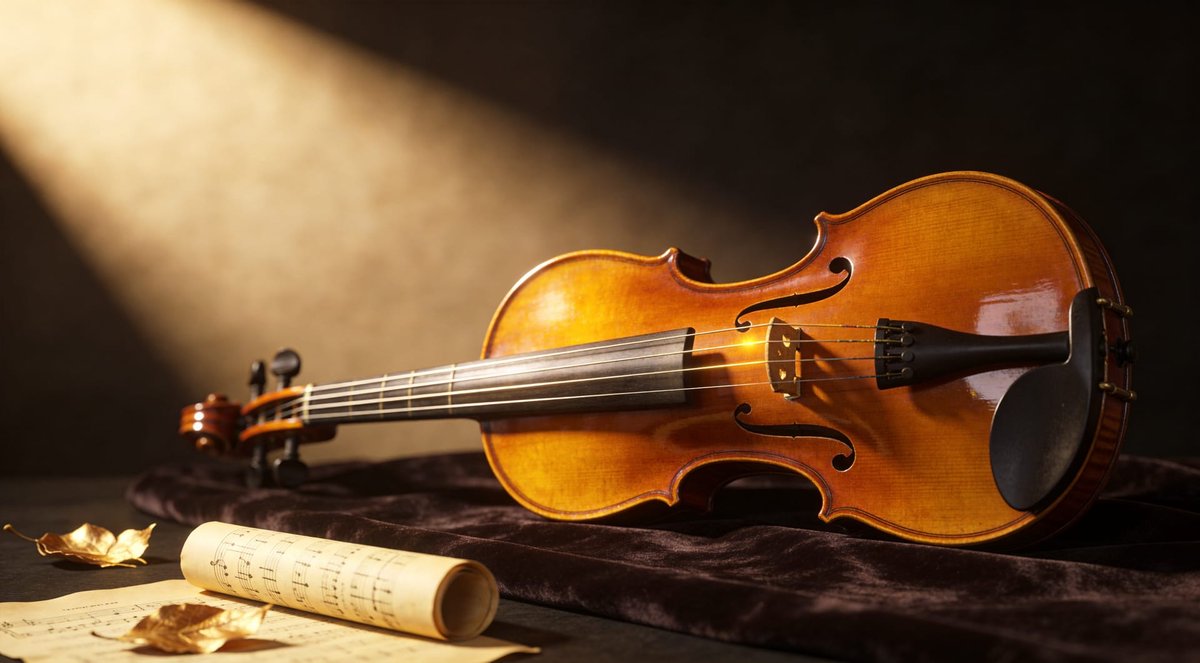
2026 Violin Market Mid-Year Review: From London Auctions to Beijing Workshops, Why Are Fine Instruments Getting More Expensive?

First Half of 2026 Violin Market Panoramic Review: London Spring Auction Masterpieces Command Higher Prices, the Investment Logic Behind a Top-Grade Master Violin at $23 Million, the Rise of Chinese Luthiers and Value Pockets, and How to Choose a Violin That Will Appreciate.

2026 Violin Market Mid-Year Observations: From London Auctions to Beijing Workshops, Why Are Good Violins Getting More Expensive? The Strad used a rather interesting title this May — "Room for Optimism." If you've been following the violin auction market, that's roughly how spring 2026 felt: no jaw-dropping record prices, but every fine piece found its home. The market isn't as frenzied as in 2021 or 2022, nor as nail-biting as 2023. It's steadier — and pickier. Meanwhile, a 1715 Stradivari violin changed hands in a private sale for $23 million. Twenty-three million dollars. Don't these two pieces of news contradict each other? No, they don't. Because they perfectly illustrate the core logic of the 2026 violin market — the expensive get more expensive, the good get better, and the middle ground is being squeezed out. Let me be honest with you: many people ask me — as famous violins get pricier, do those of us who aren't billionaires still have a chance? Yes. But you need to rethink how you approach this. Chapter One: London Spring Auctions — Fewer Big Prices, Pricier Fine Pieces In spring 2026, London's three major auction houses — Brompton's, Ingles & Hayday, and Tarisio — took turns on stage. When the results came in, the general sentiment among insiders was: fine pieces are still hotly contested, but the overall market is more rational. Let's look at some numbers first. Ingles & Hayday's total sales exceeded £2 million again, with a 78% sell-through rate. Tarisio made its London auction debut with an 89.5% sell-through rate. Brompton's secured the season's top lot. A Nicolò Gagliano cello, c. 1750 — the most notable piece was a Nicolò Gagliano cello, made around 1750, which fetched £600,000 at Brompton's — double the high estimate. The number itself isn't news. The story behind it is: this instrument came with a dendrochronology report by Peter Ratcliff, allowing the top plate wood's age to be precisely traced. Its condition was exceptional. What the buyer voted for with their wallet wasn't the name "Gagliano" but its near-perfect state over 270-plus years. The same logic played out in other sales: | Maker | Instrument | Date | Auction House | Price | |---|---|---|---|---| | Nicolò Gagliano | Cello | c.1750 | Brompton's | £600,000 | | Gennaro Gagliano | Violin | 1770 | Brompton's | £222,000 | | Annibale Fagnola | Cello | 1933 | Tarisio | £160,000 | | G.B. Grancino | Violin | — | Ingles & Hayday | £156,000 | | Camillo Camilli | Violin | 1749 | Tarisio | £144,000 | | G.B. Grancino (II) | Violin | — | Ingles & Hayday | £120,000 | One more interesting detail: a G.B. Grancino violin offered by Ingles & Hayday was re-attributed internally, reassigned from the "father" to the "son" — the same surname, but once the attribution changed, the price and market positioning shifted entirely. Believe it or not, today's market increasingly resembles a "condition market." The name matters, of course, but the actual state of preservation behind that name is what truly determines price. Another trend worth noting this season: cellos and violas are clearly strengthening. Brompton's top two lots were a cello and a violin, while Fagnola's cello, a Gagliano viola (£28,800), and a Forster viola (£19,200, nearly double the high estimate) all show collectors turning their attention beyond violins. The bow market is rock-solid too. A Sartory viola bow sold for £33,600, and a Tubbs violin bow — reportedly made specifically for the famous virtuoso August Wilhelmj — fetched £31,200. Good bows, like good books, are always scarce. Chapter Two: Top-Tier Masterpieces — The Logic Behind $23 Million This spring, a 1715 "Baron Knoop" Stradivari changed hands in a private sale for $23 million — the highest publicly verifiable figure to date. The previous owner, David Fulton, bought it in 1993 for $2.75 million. Thirty years, more than eightfold. That return, frankly, outperforms most asset classes. Stradivari-style scroll with hand-carved detailing But here's the thing: not every violin is a Baron Knoop, and not everyone can wait thirty years. Let me explain what actually underpins the value of top-tier masterpieces. Experts at Amati.com offer a clear framework — four pillars: First, the maker. Stradivari's "Golden Period" (c. 1700-1720) or Guarneri del Gesù sit at the very apex of the pyramid. This isn't mysticism; it's 300 years of consensus. Second, condition. Original wood, unaltered scroll, original varnish — every factor directly impacts price. As the experts put it bluntly: worm damage can "silently erase a zero." Third, provenance. Documented collection and performance history is a major source of premium. Who owned it, who played it — those stories are themselves part of the value. Fourth, tone. Interestingly, at the top-tier level, tone is actually not the most critical price factor. Think about it: someone buying a $23 million violin isn't primarily taking it to a concert hall to perform. | Instrument | Maker | Valuation/Price | Notes | |---|---|---|---| | Baron Knoop | Stradivari, 1715 | $23M (2026) | Believed to be the most expensive violin ever | | Tuscan, Medici | Stradivari, 1690 | Est. ~$30M | Viola, housed in the U.S. Library of Congress | | Lord Wilton | Guarneri del Gesù, 1742 | $20M | Only ~140 Guarneri violins survive | | Joachim-Ma | Stradivari, 1714 | $11.25M (Sotheby's 2025) | Key recent public auction reference | Good violins are expensive not because of hype, but because there are truly so few. Stradivari made roughly 1,100 instruments in his lifetime, with about 650 surviving. Guarneri del Gesù made even fewer — around 140. Each one has a name, a story, a lineage. How could such things not be expensive? Chapter Three: Contemporary Makers — An Undervalued Sweet Spot Fine, the stories of masterpieces are fascinating, but they're too far from most people. Let's look at something more practical. There are only about 3,200 luthiers worldwide who can truly craft concert-grade violins — an increase of just 4.5% over the past decade. Meanwhile, the number of high-net-worth households globally has grown by 18% in the same period. Put those two numbers together, and you'll roughly understand why good violins keep getting more expensive. Hand tools and a work-in-progress on a luthier's bench Master luthiers produce 4-6 instruments annually, with waiting lists typically running 3-5 years, and their instruments command a 30%-50% premium on the secondary market. What you're buying isn't a piece of wood — it's a person's decade of craftsmanship and a lifetime of reputation. Cremona, Italy — the holy land of violin making — has over 150 registered workshops, producing only 900 to 1,000 high-end handmade instruments per year. Individual prices range from €30,000 to €150,000, with some masterworks exceeding €500,000. And Chinese luthiers? At equivalent quality levels, their works are priced at roughly one-third to one-quarter of Italian counterparts. What that price gap means, I don't need to spell out. 2024: A Banner Year for Chinese Luthiers 2024 was a special year — the world's three major violin-making competitions happened to fall in the same year, and Chinese makers swept across all three events. • China International Violin Making Competition (May): 261 makers from 10 countries participated, setting a record scale. • Cremona Triennale (October): Liu Zhaojun won the silver medal for violin — with the gold left vacant, meaning he was effectively the highest scorer. • VSA Competition, USA (October): Yang Jinlong, Liang Zhiling, and Wang Jianhua won awards, with Beijing, Shanghai, and Guangzhou all represented. It wasn't one individual winning — it was five categories, three major competitions, all showing strength. That signal matters: it means the rise of Chinese violin making isn't an isolated individual phenomenon but the maturation of an entire community. What Is a Competition Award Actually Worth? Works by gold-medal luthiers typically command prices 50%-100% or more above those of equally experienced non-awarded makers. The first tier (roughly 30-40 makers) sees average annual appreciation of 12%-15%; the second tier (about 200-250 makers) runs 5%-10%. The market isn't short of cheap violins; it's short of good ones. And the supply of good violins is barely growing. Chapter Four: The Chinese Market — From "Made in China" to "Value from China" China produces over 70% of the world's annual violin output. Huangqiao makes 700,000; Queshan makes 400,000. Impressive numbers. But 92% is OEM contract manufacturing. The average export price per unit — you might not believe this — is just over $60. That's the reality of China's violin industry: massive volume, low value. However, change is underway. In 2025, the median export price of Chinese handmade violins reached $850, nearly doubling from 2020. Custom orders targeting high-end Western collector markets rose to 18% of total. The number of professional symphony orchestras in China grew from 67 in 2019 to 94 in 2025. Violin training students reached 864,000, with a training market of RMB 4.86 billion. Demand is expanding rapidly. Supply? There are only so many good luthiers, and the craft faces an aging problem — fewer young people are willing to sit on a cold bench for ten years. "Spring Strings, Picked Notes" — A Name Worth Remembering This April, in the lecture hall of the North Building at the Shanghai Conservatory of Music, a violin auction called "Spring Strings, Picked Notes" (春弦拾音) was quietly held. Hosted by Shanghai Baojiang Auction, the only professional institution in China specializing in musical instrument auctions, they systematically brought three categories to the auction block: original instruments from international competition winners, masterworks by contemporary renowned makers, and collector-grade and performance-grade violins. Among the lots were the original violin from a VSA quartet silver medal, an original from a gold medal at the Italian International Violin Making Competition, and an old instrument made in 1954 by the East China Branch of the Central Conservatory of Music. The results? Some lots sold; some passed. But what I want to highlight isn't which violin sold for how much. It's this: the very fact that a market now has auctions specifically dedicated to contemporary violins is itself highly telling. One lot passing says nothing, but when a category begins building secondary-market infrastructure — auctions, authentication, appraisal, provenance records — it signals that this market is moving from "private deals within circles" toward "standardization and transparency." That's a hallmark of maturation. Blind Testing: A Turning Point In May 2026, a blind sound test of Chinese and foreign violins was held in Beijing. Five Chinese handmade violins faced off against five Italian maker instruments. The result: the Chinese violins excelled in tonal sensitivity, transparency, volume, and tonal consistency — even surpassing several Italian instruments. Meanwhile, at the Shanghai Spring International Violin Culture Week, a blind test likewise saw a Chinese violin take first place. The significance of blind testing is this: it strips away brand halo and origin bias, returning to a comparison of pure sound. If Chinese violins don't lose to European ones on pure tone, then the 3-4x price gap between them will eventually close through Chinese violin price appreciation. That's not a prediction; it's basic economics. Chapter Five: How to Choose a Violin That Will "Appreciate" Alright, after all this market talk, your most pressing question is probably: so how exactly should I choose? Here are five pieces of advice, straight from the heart. One: Focus on top-tier luthiers Don't fantasize about bargain hunting. In violin investing, "finding a deal" basically means "being taken." Look for luthiers with international award backgrounds and clear lineage. This isn't to say others don't make good instruments — but from an investment perspective, "verifiable labels" — competition gold medals, master lineage, major performance history — are the anchors of long-term value. Among current Chinese luthiers: Zong Guihai won the violin gold medal at the 2025 Italian Sanremo International Violin Making Competition; Liang Zhiling won the viola gold at Sanremo the same year, plus two earlier VSA awards; Shi Baozhong is a successor of the Shi Andun craft tradition — Shi Andun, who was featured in America's "500 Barens," is a legendary figure in Chinese violin-making history. These "labels" aren't empty — they directly determine an instrument's marketability and appreciation potential. Two: Look for works with "stories" Award-winning original instruments — the actual one used in competition — command prices far above the same maker's ordinary works. Why? Because of the story. Because of uniqueness. Because "this one" is the sound the judges heard when scoring. Provenance, performance history, and documentation — in the world of violin collecting, these "soft assets" matter as much as the instrument itself. Shi Baozhong's work illustrates this perfectly. His lineage spans four traditions — from Song Maolin to Chen Guangqi, Chen Guangyue, and then Shi Andun in Hong Kong. That chain of transmission is itself a collectible chapter of Chinese violin-making history. You're not just buying a violin; you're buying a legacy. Three: Condition and paperwork matter more than you think Remember that £600,000 Gagliano cello from the opening? Its dendrochronology report played a crucial role in the auction. When buying a violin, certificates, appraisal reports, and provenance records — these "papers" matter as much as the instrument itself. A famous violin without "identification" can be worth only half — or even less — of one with complete documentation. Four: Hold long-term, at least five years A violin isn't a stock. It won't go up the day after you buy it. A good contemporary maker's work needs about five years to show meaningful appreciation; ten years is even better. First-tier luthiers' works appreciate 12%-15% annually, which sounds good — but that's compounding measured in years, not short-term speculation. The safest way to invest in a violin is to first fall in love with its sound. If you buy purely for investment without loving the tone, you'll likely be disappointed. But if you genuinely love it, appreciation is just a bonus. Five: Choose legitimate channels This can't be overemphasized. The violin market runs deep — fakes, altered labels, inflated dates — these problems still exist today. Choose reputable dealers and institutions with authentication capability. Ideally, ones with physical showrooms, instruments you can see in person, and after-sales support. Violin Temple · Luthier Club — we've invited six luthiers to join our first cohort: Zong Guihai, Liang Zhiling, Shi Baozhong, Gong Weitao, Zheng Benjun, and Zhou Xinjun — each with clear international competition records and lineage backgrounds. We don't accept just anyone; the standard is simple: the work must stand the test of time. Here's a micro case study: Zheng Benjun is a 2010 VSA finalist award-winning luthier. His copy of the 1743 Guarneri "Il Cannone" was priced at RMB 60,000 in 2025; the same model rose to RMB 65,000 in 2026 — an 8.3% annual increase. It doesn't look dramatic, but it's real, sustainable growth. If your budget is RMB 100,000-150,000, Zong Guihai's gold-medal violin (RMB 115,000) is a choice in its value-rising phase; with a larger budget, Liang Zhiling's gold-medal viola (RMB 270,000) is a rarer category — few good luthiers make violas, and gold-medal violas are even scarcer. Chapter Six: From Entry-Level to Collecting Not everyone needs to become a collector overnight. In fact, I'd advise most people to start with experience. Renting is the smartest way in. You don't need to drop hundreds of thousands on a violin at once — rent one first to try. What tone and feel you truly love can only be discovered through sustained practice and performance. Violin Temple · Rental System: from RMB 50/month entry-level instruments to RMB 5,000/week master-grade instruments, covering the full growth path from beginner to professional performance. You can start with a monthly rental and upgrade as your level rises — that itself is a process of deepening your understanding of violins. The choice path for different budgets looks roughly like this: • RMB 50-200/month: rental entry, developing feel and aesthetic • RMB 10,000-50,000: performance-grade works by second-tier luthiers — someone like Zhou Xinjun with 30 years of experience offers instruments just over RMB 20,000 that are already quite excellent • RMB 50,000-150,000: standard works by first-tier luthiers, or non-original competition instruments by award-winning makers • RMB 150,000-300,000: fine works or award-winning original instruments by gold-medal luthiers — like Zong Guihai's Sanremo gold-medal violin • Above RMB 300,000: rare pieces, such as Liang Zhiling's gold-medal viola, or century-old European instruments Violin Temple · Treasure Hall The Violin Temple Treasure Hall currently holds 25 collection-grade pieces, works with over 50 partner luthiers, and 40 years of industry experience. We won't claim to be the largest in China, but in Beijing at least, if you're looking for a violin with a story, quality, and documentation, coming here is never a mistake. Conclusion: On the Value of Time Writing this, I'd like to offer a perspective that may not sound very "investment-oriented." Investing in a violin isn't, at its core, investing in wood, nor in a rate of return. What you're investing in is "scarce craftsmanship." The 3,200 people in the world who can make a truly great violin — each one has spent decades honing a single craft. Master luthiers make only 4-6 instruments a year. In an age where everything accelerates, that slowness is itself a form of scarcity. Good violins take time to make. Good violins also take time to appreciate. David Fulton waited 30 years for $23 million. A contemporary luthier's work may likewise require you to wait ten, twenty years before you see its true value. But one thing is certain: good violins will keep getting more expensive — not because of hype, but because there are only so many people who can make them, and more and more people who can appreciate them. There's music beyond the strings. This article represents Violin Temple's observations and judgments on the violin market in the first half of 2026 and does not constitute investment advice. Violin investing carries risk; enter the market with caution. References 1. The Strad, Auction Report June 2026: Room for optimism, 2026-05-29 2. Amati.com, The Most Expensive Violin Ever Sold, 2026-07-13 3. Tarisio, Auction Records 4. myluthier.co, The 5 Most Expensive Violins in the World - 2026 5. IMTA, "2026 Global Stringed Instrument Market Deep Insight Report" 6. China News Service Shanghai, "Spring Strings, Picked Notes" Violin Auction, 2026-04-03 7. CNR Online, Cremona Meets Shanghai, 2026-04-03 8. Chuanguan News, International Award-Winning Violins Gather in Shanghai, 2026-04-03 9. Violin Temple, Analysis of China's High-End Violin Industry Status and Appreciation Potential, 2026-07-31 10. Violin Temple Official Website violintemple.com
← Back to Articles