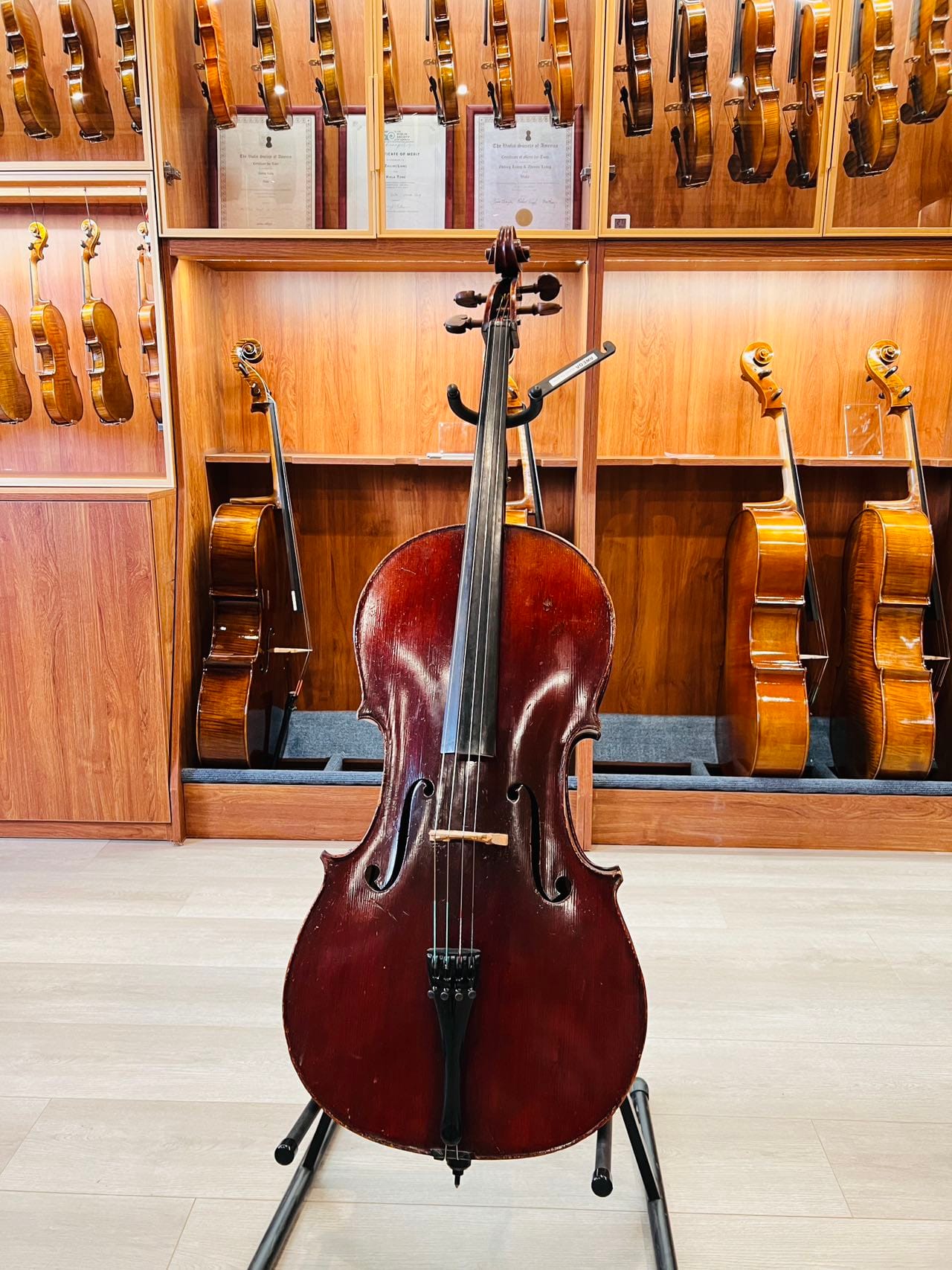
 Around 1899, it was born in Markneukirchen, Saxony, Germany—the old homeland of European violin making. A 4/4 full-size cello, collection No. #C032.
It first served in a professional symphony orchestra in the former Soviet Union, rehearsing and performing seven or eight hours a day. It was genuinely played, not kept behind glass. After the Soviet Union dissolved, a Korean dealer acquired it, and it made its way to Asia.
Around 2016, Mr. Yu Mingqing, cello professor at the Central Conservatory of Music and president of the Cello Society of the Chinese Musicians' Association, and his daughter, cello associate professor Yu Jia, placed this instrument into the hands of a middle school attached to the conservatory—Wu You.
In November 2017, Wu You took it to Várpalota, Hungary, to compete in the 7th "David Popper" International Cello Competition. Held every two years, young virtuosos from around the world flock there. Wu You played this instrument through three rounds and won first prize in the junior division—to this day, still the best result achieved by a domestically trained Chinese competitor in this event. The winners' list is still searchable online.
Later, Wu You went to the Liszt Academy of Music for further studies, joined a professional orchestra in Paris, and switched to a 150,000-euro French antique.
Some people hearing this might mutter: he switched instruments—does that mean this one isn't good enough?
Quite the opposite. When Wu You won the championship, he was still a middle school student. This instrument accompanied him through the most critical stretch of his journey from child player to professional performer—exam preparation, competitions, stage appearances—it carried him through all of it. His switching instruments is like a child outgrowing his shoes: not that the shoes were bad, but that his feet grew. This instrument isn't a collector's endpoint locked in a glass case—it's an instrument that can accompany you through professional training, competitions, and onto the stage. That's what it's done its entire life.
"He switched instruments like a child outgrowing his shoes: not that the shoes were bad, but that his feet grew."
Now, about the instrument itself. Look at this top plate—European spruce, back and sides of European maple, over 125 years old, moisture long since dissipated, no more cracking or warping. A new instrument needs to be broken in—three to five years of playing before the sound wakes up. This one was broken in by orchestras and competition stages for over a hundred years—its voice is at its finest age.
Now look at this varnish—late 19th-century spirit varnish, deep brown-red with a hint of aubergine. This patina formed through over a century of natural oxidation. That artificial aging with its garish shine can't fool a connoisseur.
Listen to the sound—a typical German instrument approach: warm and full-bodied, the bass digs deep, it holds its own as a soloist, blends into the section in an orchestra, all four strings balanced, carries far. The rarest thing in an old instrument is just two words: healthy.
What's the biggest fear when buying an old instrument? Unclear provenance. Composite instruments pieced together from European finds, instruments with replaced necks, instruments with fabricated stories—there are far too many. This instrument: from a Soviet orchestra to a Korean dealer, to Yu Mingqing and Yu Jia, to Wu You's competition—names, dates, every chapter intact. We have written documentation of the instrument's condition and restoration records. Come in, and I'll lay it all out for you one by one.
Price: starting at 150,000. Think it's expensive? Do the math: commissioning a new professional handmade cello from a renowned maker today—our hall's Teacher Liang Zhiling's handmade violas start at 240,000, and cellos would only be more. And this one is 127 years old, has won an international championship, with a complete and verifiable history—it's not just an "old instrument," it's a piece of history that can still resound.
For serious students on the professional track—exam preparation, competitions, stage appearances—play it straight out of the case. For adult players and teachers who want an instrument to play for a lifetime and pass down—this is an opportunity with a crystal-clear threshold.
A 150,000 matter can't be decided through a screen. Come to the Treasure Hall. I'll play it for you, and you can try it yourself.
· · ·
Violin Temple · Violin Temple Treasure Hall · Violin for Sale Series Episode 001 Edited Script
www.violintemple.com
Around 1899, it was born in Markneukirchen, Saxony, Germany—the old homeland of European violin making. A 4/4 full-size cello, collection No. #C032.
It first served in a professional symphony orchestra in the former Soviet Union, rehearsing and performing seven or eight hours a day. It was genuinely played, not kept behind glass. After the Soviet Union dissolved, a Korean dealer acquired it, and it made its way to Asia.
Around 2016, Mr. Yu Mingqing, cello professor at the Central Conservatory of Music and president of the Cello Society of the Chinese Musicians' Association, and his daughter, cello associate professor Yu Jia, placed this instrument into the hands of a middle school attached to the conservatory—Wu You.
In November 2017, Wu You took it to Várpalota, Hungary, to compete in the 7th "David Popper" International Cello Competition. Held every two years, young virtuosos from around the world flock there. Wu You played this instrument through three rounds and won first prize in the junior division—to this day, still the best result achieved by a domestically trained Chinese competitor in this event. The winners' list is still searchable online.
Later, Wu You went to the Liszt Academy of Music for further studies, joined a professional orchestra in Paris, and switched to a 150,000-euro French antique.
Some people hearing this might mutter: he switched instruments—does that mean this one isn't good enough?
Quite the opposite. When Wu You won the championship, he was still a middle school student. This instrument accompanied him through the most critical stretch of his journey from child player to professional performer—exam preparation, competitions, stage appearances—it carried him through all of it. His switching instruments is like a child outgrowing his shoes: not that the shoes were bad, but that his feet grew. This instrument isn't a collector's endpoint locked in a glass case—it's an instrument that can accompany you through professional training, competitions, and onto the stage. That's what it's done its entire life.
"He switched instruments like a child outgrowing his shoes: not that the shoes were bad, but that his feet grew."
Now, about the instrument itself. Look at this top plate—European spruce, back and sides of European maple, over 125 years old, moisture long since dissipated, no more cracking or warping. A new instrument needs to be broken in—three to five years of playing before the sound wakes up. This one was broken in by orchestras and competition stages for over a hundred years—its voice is at its finest age.
Now look at this varnish—late 19th-century spirit varnish, deep brown-red with a hint of aubergine. This patina formed through over a century of natural oxidation. That artificial aging with its garish shine can't fool a connoisseur.
Listen to the sound—a typical German instrument approach: warm and full-bodied, the bass digs deep, it holds its own as a soloist, blends into the section in an orchestra, all four strings balanced, carries far. The rarest thing in an old instrument is just two words: healthy.
What's the biggest fear when buying an old instrument? Unclear provenance. Composite instruments pieced together from European finds, instruments with replaced necks, instruments with fabricated stories—there are far too many. This instrument: from a Soviet orchestra to a Korean dealer, to Yu Mingqing and Yu Jia, to Wu You's competition—names, dates, every chapter intact. We have written documentation of the instrument's condition and restoration records. Come in, and I'll lay it all out for you one by one.
Price: starting at 150,000. Think it's expensive? Do the math: commissioning a new professional handmade cello from a renowned maker today—our hall's Teacher Liang Zhiling's handmade violas start at 240,000, and cellos would only be more. And this one is 127 years old, has won an international championship, with a complete and verifiable history—it's not just an "old instrument," it's a piece of history that can still resound.
For serious students on the professional track—exam preparation, competitions, stage appearances—play it straight out of the case. For adult players and teachers who want an instrument to play for a lifetime and pass down—this is an opportunity with a crystal-clear threshold.
A 150,000 matter can't be decided through a screen. Come to the Treasure Hall. I'll play it for you, and you can try it yourself.
· · ·
Violin Temple · Violin Temple Treasure Hall · Violin for Sale Series Episode 001 Edited Script
www.violintemple.com出售提琴脚本(第001期)· 一把一百二十七岁的冠军大提琴
Guides管理员August 30, 2026
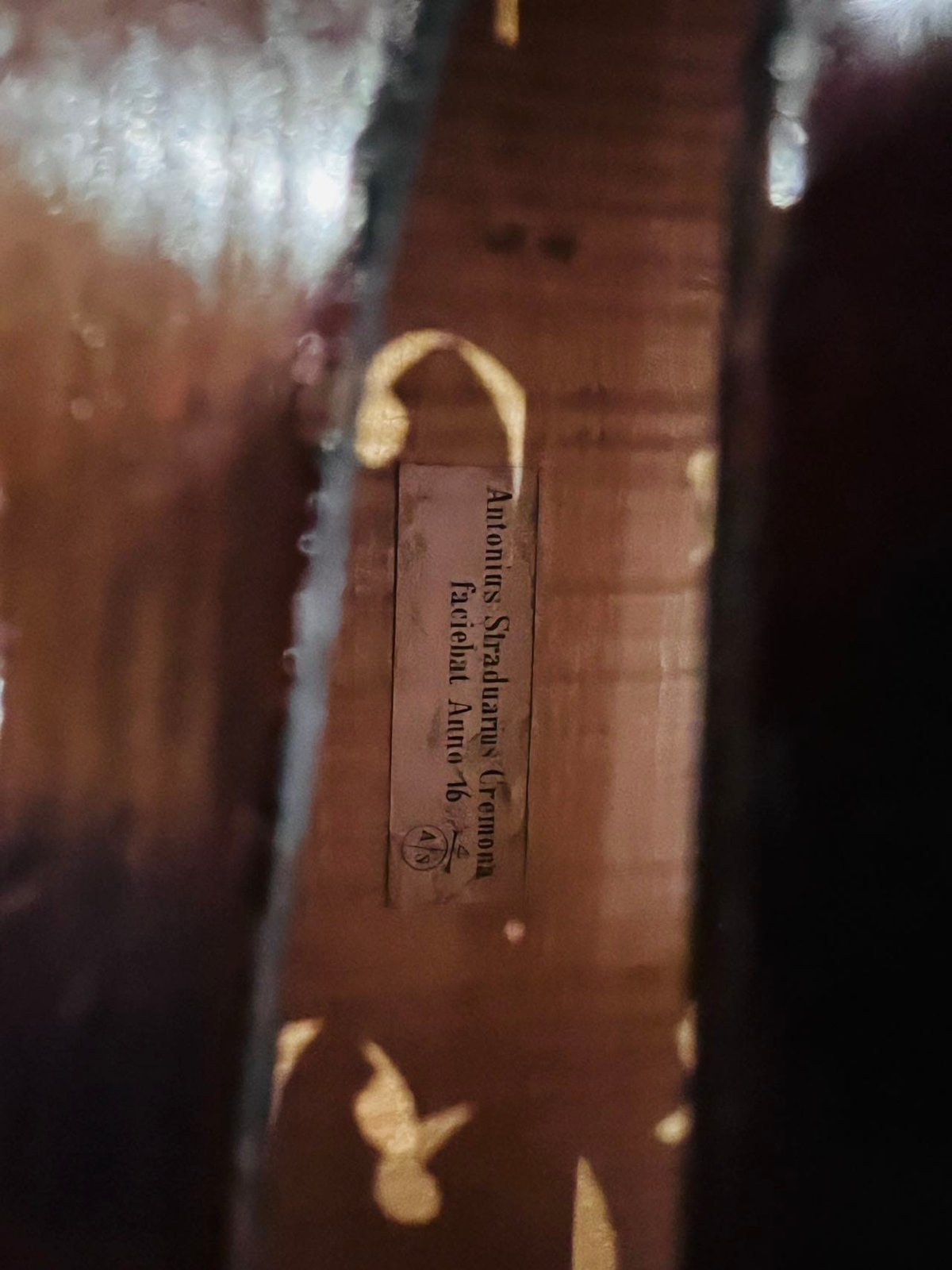
出售提琴系列视频口播稿 · 馆藏 #C032 约1899年德国 4/4 大提琴 · 全文约4分钟,拍摄提词与剪辑对照用。
Around 1899, it was born in Markneukirchen, Saxony, Germany—the old homeland of European violin making. A 4/4 full-size cello, collection No. #C032.
It first served in a professional symphony orchestra in the former Soviet Union, rehearsing and performing seven or eight hours a day. It was genuinely played, not kept behind glass. After the Soviet Union dissolved, a Korean dealer acquired it, and it made its way to Asia.
Around 2016, Mr. Yu Mingqing, cello professor at the Central Conservatory of Music and president of the Cello Society of the Chinese Musicians' Association, and his daughter, cello associate professor Yu Jia, placed this instrument into the hands of a middle school attached to the conservatory—Wu You.
In November 2017, Wu You took it to Várpalota, Hungary, to compete in the 7th "David Popper" International Cello Competition. Held every two years, young virtuosos from around the world flock there. Wu You played this instrument through three rounds and won first prize in the junior division—to this day, still the best result achieved by a domestically trained Chinese competitor in this event. The winners' list is still searchable online.
Later, Wu You went to the Liszt Academy of Music for further studies, joined a professional orchestra in Paris, and switched to a 150,000-euro French antique.
Some people hearing this might mutter: he switched instruments—does that mean this one isn't good enough?
Quite the opposite. When Wu You won the championship, he was still a middle school student. This instrument accompanied him through the most critical stretch of his journey from child player to professional performer—exam preparation, competitions, stage appearances—it carried him through all of it. His switching instruments is like a child outgrowing his shoes: not that the shoes were bad, but that his feet grew. This instrument isn't a collector's endpoint locked in a glass case—it's an instrument that can accompany you through professional training, competitions, and onto the stage. That's what it's done its entire life.
"He switched instruments like a child outgrowing his shoes: not that the shoes were bad, but that his feet grew."
Now, about the instrument itself. Look at this top plate—European spruce, back and sides of European maple, over 125 years old, moisture long since dissipated, no more cracking or warping. A new instrument needs to be broken in—three to five years of playing before the sound wakes up. This one was broken in by orchestras and competition stages for over a hundred years—its voice is at its finest age.
Now look at this varnish—late 19th-century spirit varnish, deep brown-red with a hint of aubergine. This patina formed through over a century of natural oxidation. That artificial aging with its garish shine can't fool a connoisseur.
Listen to the sound—a typical German instrument approach: warm and full-bodied, the bass digs deep, it holds its own as a soloist, blends into the section in an orchestra, all four strings balanced, carries far. The rarest thing in an old instrument is just two words: healthy.
What's the biggest fear when buying an old instrument? Unclear provenance. Composite instruments pieced together from European finds, instruments with replaced necks, instruments with fabricated stories—there are far too many. This instrument: from a Soviet orchestra to a Korean dealer, to Yu Mingqing and Yu Jia, to Wu You's competition—names, dates, every chapter intact. We have written documentation of the instrument's condition and restoration records. Come in, and I'll lay it all out for you one by one.
Price: starting at 150,000. Think it's expensive? Do the math: commissioning a new professional handmade cello from a renowned maker today—our hall's Teacher Liang Zhiling's handmade violas start at 240,000, and cellos would only be more. And this one is 127 years old, has won an international championship, with a complete and verifiable history—it's not just an "old instrument," it's a piece of history that can still resound.
For serious students on the professional track—exam preparation, competitions, stage appearances—play it straight out of the case. For adult players and teachers who want an instrument to play for a lifetime and pass down—this is an opportunity with a crystal-clear threshold.
A 150,000 matter can't be decided through a screen. Come to the Treasure Hall. I'll play it for you, and you can try it yourself.
· · ·
Violin Temple · Violin Temple Treasure Hall · Violin for Sale Series Episode 001 Edited Script
www.violintemple.com