Youth OrchestraOctober 18, 2026· 乐团场记
Idyllic Symphony Youth Public Welfare Orchestra · Classroom Q&A: Why does a child feel tired the first time they hold the bow?
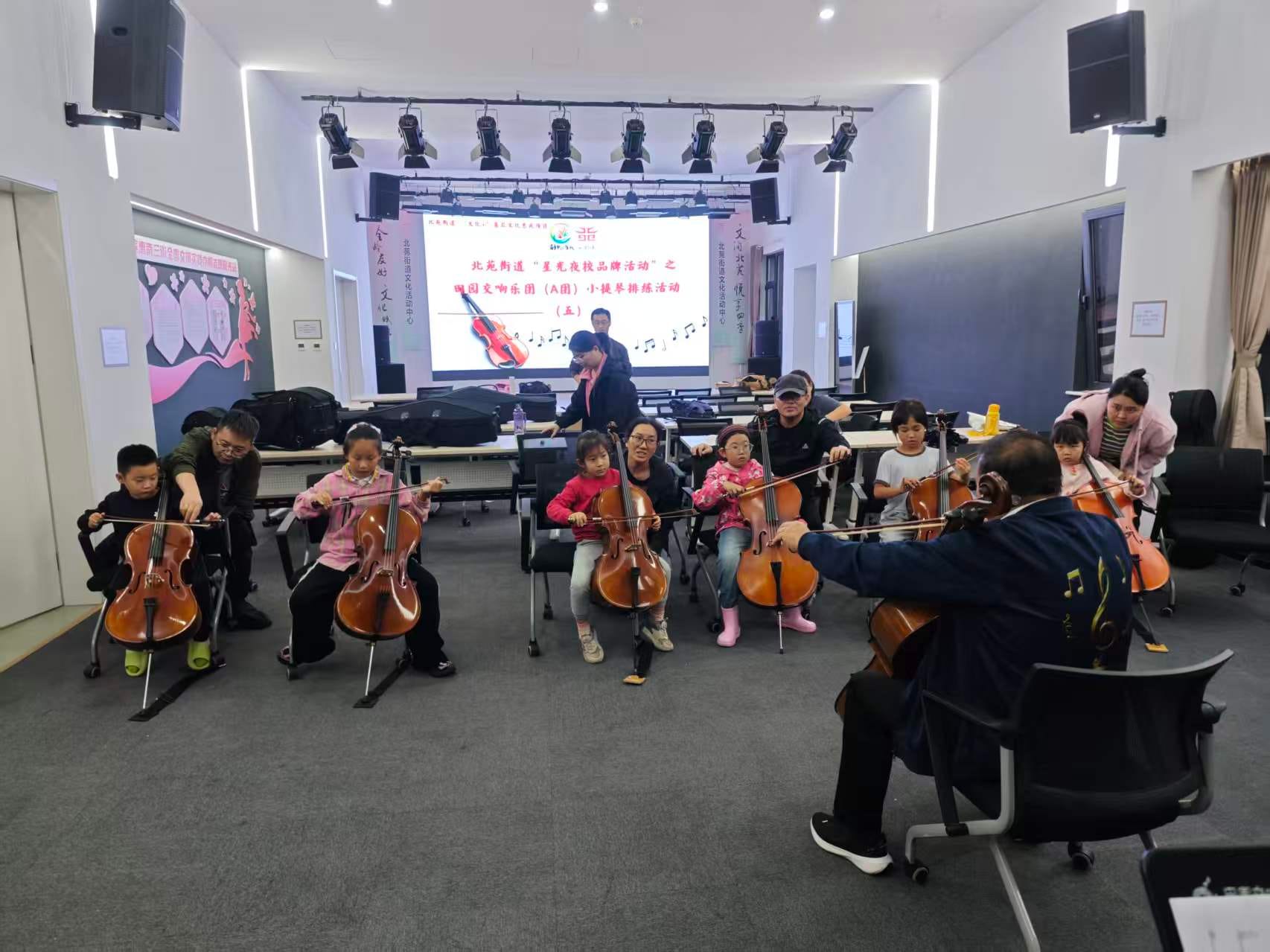
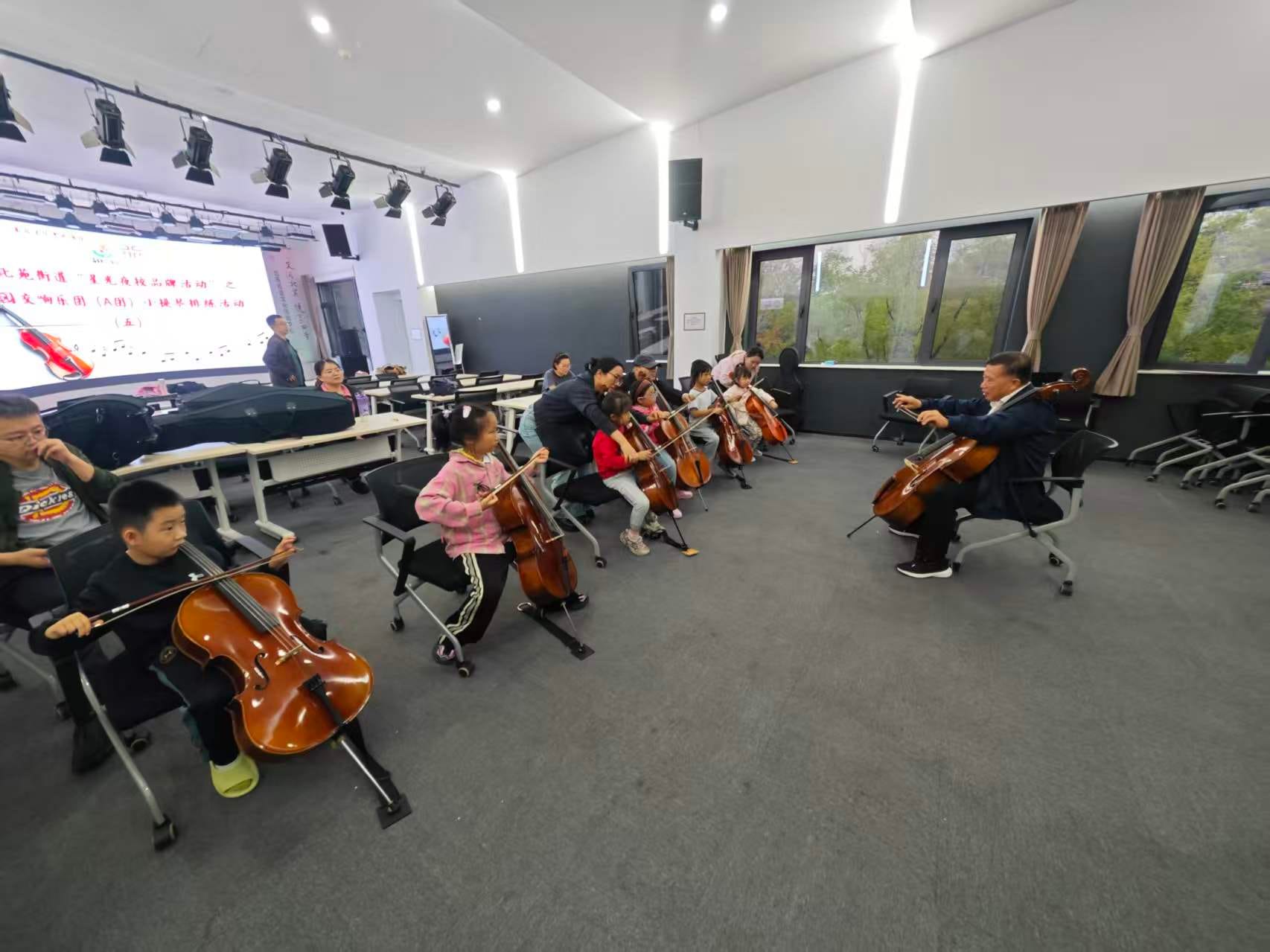
Yesterday afternoon, the Idyllic Symphony Youth Public Welfare Orchestra held the first class of the 2026 fall cello class at Beiyuan Subdistrict. Orchestra director Tian Lifu first spoke to the students and parents about the use and maintenance of violins and bows, after which Professor Tian Yuan explained to the children one by one the methods of holding the cello and the bow.
Idyllic Symphony Youth Public Welfare Orchestra · In-Class Q&A
Why does a child feel tired
the first time they hold a bow?
Beiyuan Subdistrict 2026 Autumn Cello Class · October 17, 2026
Yesterday afternoon, the Beiyuan Subdistrict 2026 Autumn Cello Class of the Idyllic Symphony Youth Public Welfare Orchestra held its first lesson. Orchestra director Tian Lifu first explained the use and maintenance of the violin and bow to the students and parents, after which Professor Tian Yuan explained to the children one by one how to hold the cello and the bow.
 · · ·
That evening, feedback from a parent
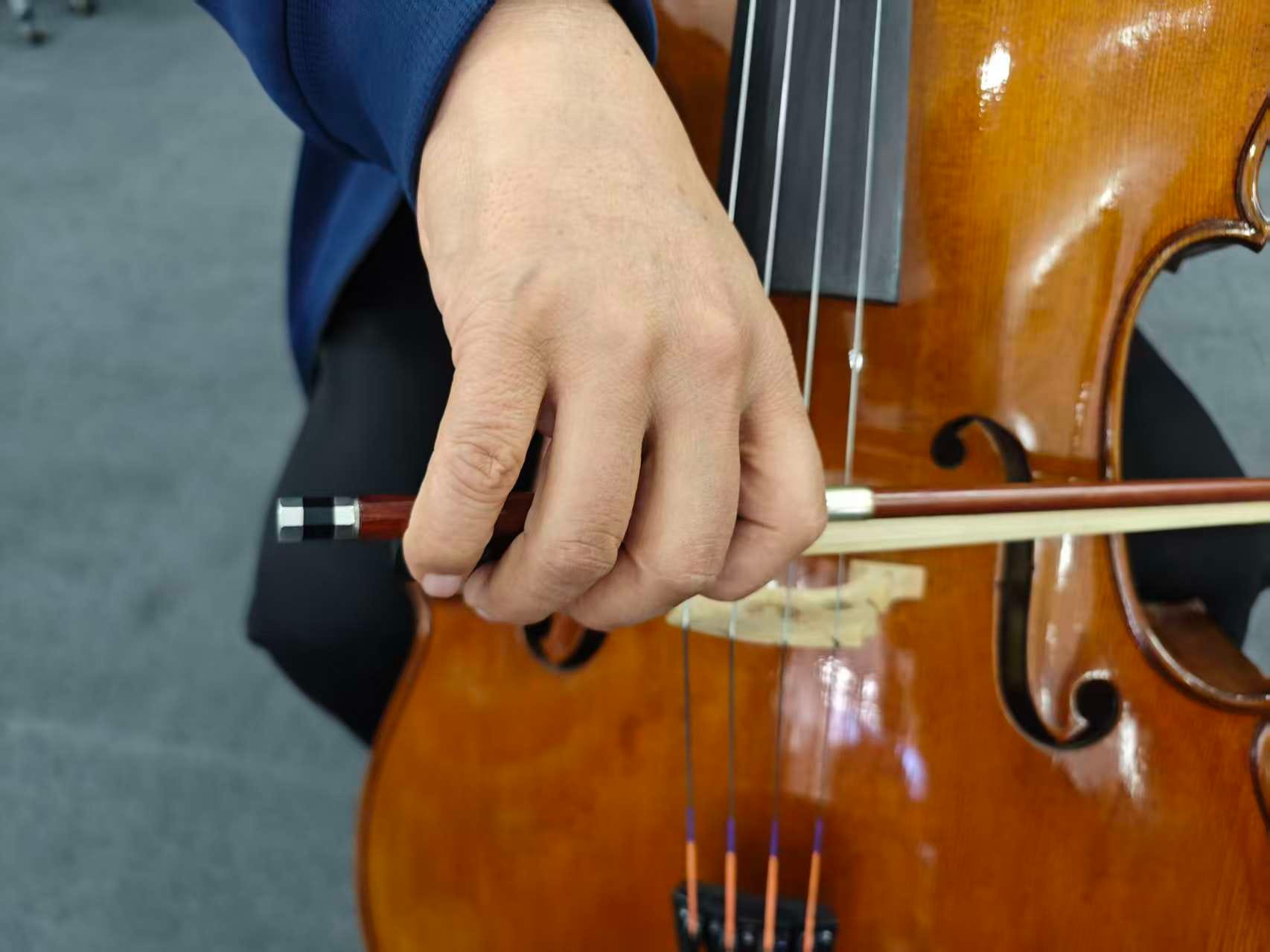
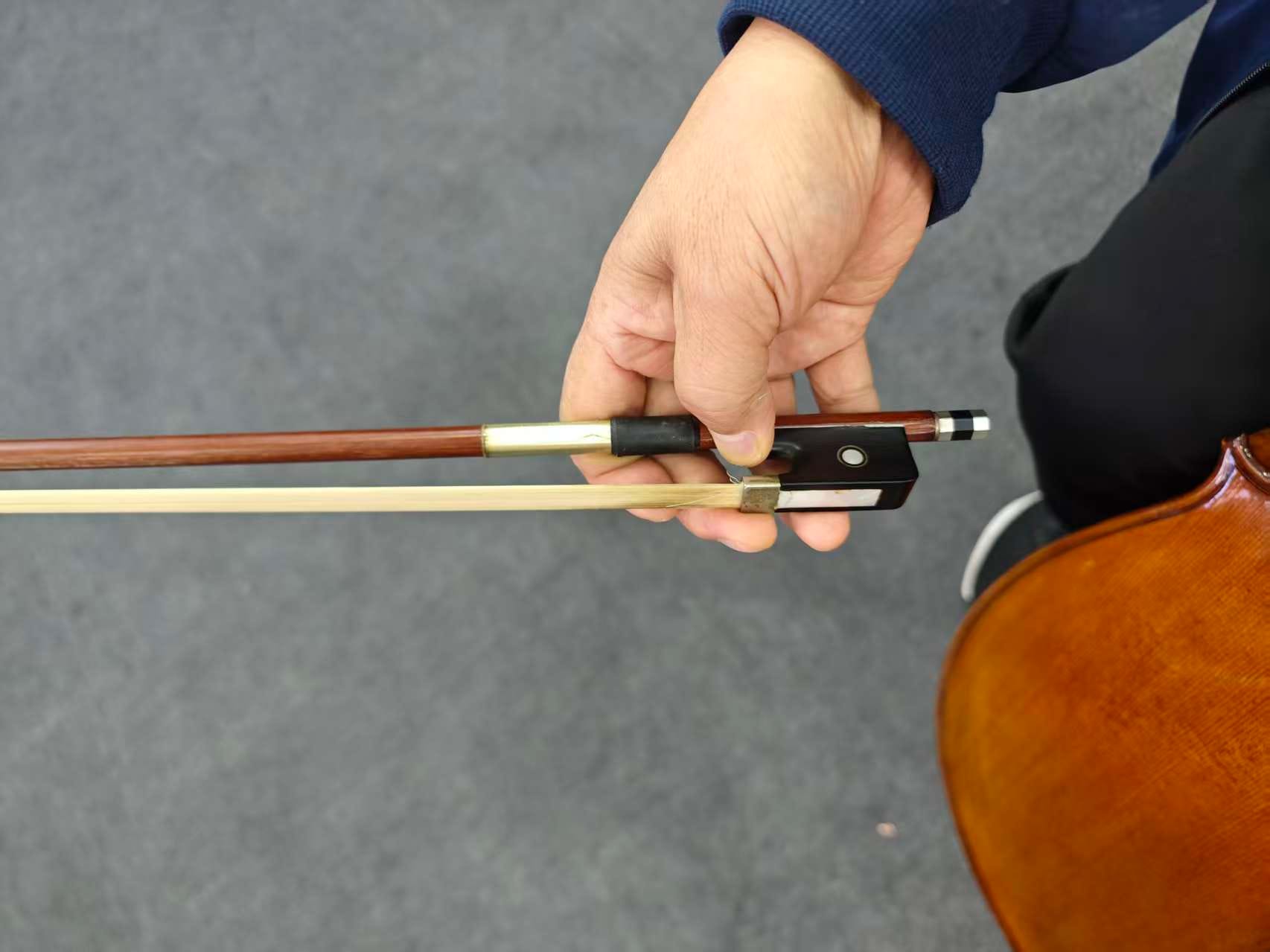
That evening, a parent gave feedback: their child held the bow using the standard method taught by the teacher, but after playing for a while, their hand felt tired.
This is a good question, and it is a problem almost every child beginning string playing—and their parents—will encounter. Is this "tiredness" normal? Does it matter? Orchestra director Tian Lifu gave a special explanation.
· · ·
500 years ago, you could hold the bow any way you liked
Many people don't know that about 500 years ago, when the violin was first invented, there was no "standard posture" for holding the bow—you did whatever felt comfortable.
It's like a child today touching a bow for the first time and instinctively gripping it with the whole hand—500 years ago, this posture was completely fine. Playing technique was simple then, and the demands on tone color were limited; being able to produce sound was enough.
In other words, the child's instinctive "whole-hand grip" today is precisely the oldest, most primitive way of holding this instrument.
· · ·
Where "standard" came from
Later, as playing technique continued to advance, people wanted better tone and richer technique, and the problem arose: gripping the bow with the whole hand leaves the wrist stiff, making delicate variation impossible.
To control the bow flexibly, players must engage every part of the body:
finger joints → wrist joint → elbow joint → shoulder joint
and even all the joints of the whole body, working in coordination
Through the exploration of generation after generation of performers, today's so-called "standard" bow hold gradually developed. It was not decreed by any one person, but is the most efficient solution for bow control, distilled from 500 years of playing experience.
· · ·
Children face the final result of 500 years right from the start
Understanding this makes it clear why children get tired.
Children learning today start out learning this final result of 500 years of evolution. This posture requires them to solve three things at once that they have never done before:
① Fine control of small muscle groups—the small muscles in the fingers that are almost never used in daily life must be activated individually;
② Coordinated control of multiple joints—fingers, wrist, elbow, and shoulder must work together rather than each moving on its own;
③ Strength support—the bow itself has weight, and lifting and steadying it requires muscle strength.
So feeling tired is normal, and this is hard to achieve overnight. Muscles must grow, and the coordination between nerves and muscles must be honed; both take time. Parents and children alike should be a little more patient—this is not the child being "no good," but a stage that every professional performer went through when they first started.
· · ·
Another perspective: this is the best physical training
But from another angle, this "chore" is actually a particularly precious gift.
Standard bowing is essentially training one thing: letting the brain wisely direct the body's bones and muscles to perform extremely fine movements. If a finger is off by a millimeter, the tone changes; if the wrist is a little looser or tighter, the flavor of the piece changes. This kind of precise control from brain to fingertips is something most daily activities simply cannot train.
If a child receives this kind of training from an early age, over several years their hand-eye coordination, fine motor skills, and body control will all be fully developed. When they grow up, whatever they do, they are unlikely to be clumsy.
So the next time a child complains that their hand is tired, parents can smile and tell them: this tiredness, again and again, is precisely your fingers, your wrist, and your brain quietly getting stronger.
 Idyllic Symphony Youth Public Welfare Orchestra
Tongzhou Beiyuan Subdistrict Teaching Site
October 18, 2026
Idyllic Symphony Youth Public Welfare Orchestra · Let good music enter every home
· · ·
That evening, feedback from a parent
That evening, a parent gave feedback: their child held the bow using the standard method taught by the teacher, but after playing for a while, their hand felt tired.
This is a good question, and it is a problem almost every child beginning string playing—and their parents—will encounter. Is this "tiredness" normal? Does it matter? Orchestra director Tian Lifu gave a special explanation.
· · ·
500 years ago, you could hold the bow any way you liked
Many people don't know that about 500 years ago, when the violin was first invented, there was no "standard posture" for holding the bow—you did whatever felt comfortable.
It's like a child today touching a bow for the first time and instinctively gripping it with the whole hand—500 years ago, this posture was completely fine. Playing technique was simple then, and the demands on tone color were limited; being able to produce sound was enough.
In other words, the child's instinctive "whole-hand grip" today is precisely the oldest, most primitive way of holding this instrument.
· · ·
Where "standard" came from
Later, as playing technique continued to advance, people wanted better tone and richer technique, and the problem arose: gripping the bow with the whole hand leaves the wrist stiff, making delicate variation impossible.
To control the bow flexibly, players must engage every part of the body:
finger joints → wrist joint → elbow joint → shoulder joint
and even all the joints of the whole body, working in coordination
Through the exploration of generation after generation of performers, today's so-called "standard" bow hold gradually developed. It was not decreed by any one person, but is the most efficient solution for bow control, distilled from 500 years of playing experience.
· · ·
Children face the final result of 500 years right from the start
Understanding this makes it clear why children get tired.
Children learning today start out learning this final result of 500 years of evolution. This posture requires them to solve three things at once that they have never done before:
① Fine control of small muscle groups—the small muscles in the fingers that are almost never used in daily life must be activated individually;
② Coordinated control of multiple joints—fingers, wrist, elbow, and shoulder must work together rather than each moving on its own;
③ Strength support—the bow itself has weight, and lifting and steadying it requires muscle strength.
So feeling tired is normal, and this is hard to achieve overnight. Muscles must grow, and the coordination between nerves and muscles must be honed; both take time. Parents and children alike should be a little more patient—this is not the child being "no good," but a stage that every professional performer went through when they first started.
· · ·
Another perspective: this is the best physical training
But from another angle, this "chore" is actually a particularly precious gift.
Standard bowing is essentially training one thing: letting the brain wisely direct the body's bones and muscles to perform extremely fine movements. If a finger is off by a millimeter, the tone changes; if the wrist is a little looser or tighter, the flavor of the piece changes. This kind of precise control from brain to fingertips is something most daily activities simply cannot train.
If a child receives this kind of training from an early age, over several years their hand-eye coordination, fine motor skills, and body control will all be fully developed. When they grow up, whatever they do, they are unlikely to be clumsy.
So the next time a child complains that their hand is tired, parents can smile and tell them: this tiredness, again and again, is precisely your fingers, your wrist, and your brain quietly getting stronger.
Idyllic Symphony Youth Public Welfare Orchestra
Tongzhou Beiyuan Subdistrict Teaching Site
October 18, 2026
Idyllic Symphony Youth Public Welfare Orchestra · Let good music enter every home