Youth OrchestraOctober 23, 2026· 乐团场记
Why do million-dollar violins also use "weak" glue?
This Monday, two new students joined the violin class of the Grade B orchestra of the Jinyu International Community String Orchestra. Everyone was fully engaged in Teacher Song Binbin's class, and word of mouth gradually spread. In terms of progress, some students have already completely mastered "Twinkle Twinkle Little Star."
Idyllic Symphony Youth Public Welfare Orchestra · Class Notes
Why do violins worth millions
also use "weak" glue?
Jinyu International Community Teaching Site · October 19, 2026
This Monday, two new students joined the violin class of the Jinyu International Community String Orchestra's B-level ensemble. Teacher Song Binbin's classes are ones the students all throw themselves into, and word has gradually spread. In terms of progress, some students have already fully mastered "Twinkle Twinkle Little Star."
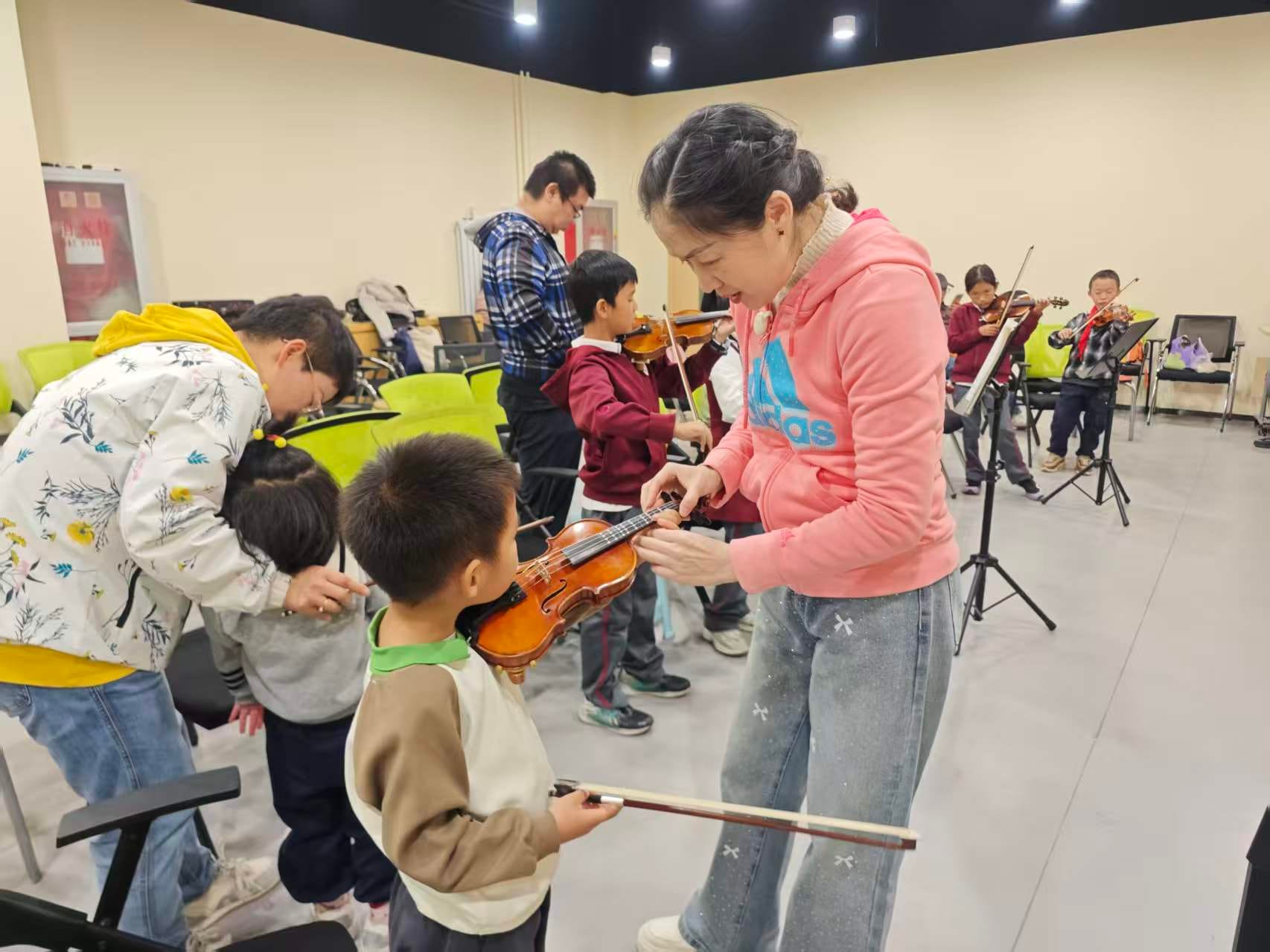 At this rate, there is hope that by the end of the year they can share a stage with the violin class from Beiyuan Subdistrict.
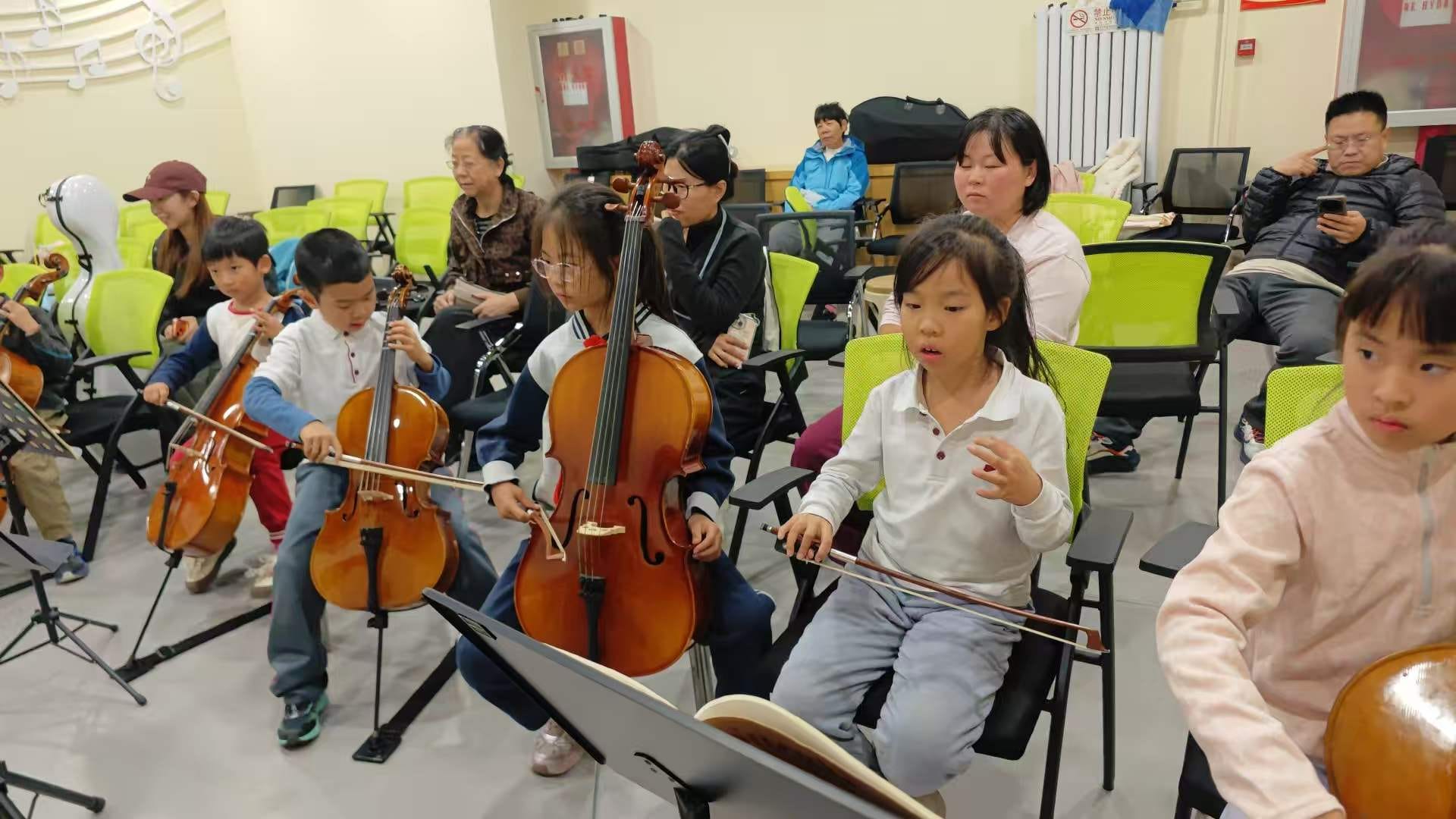
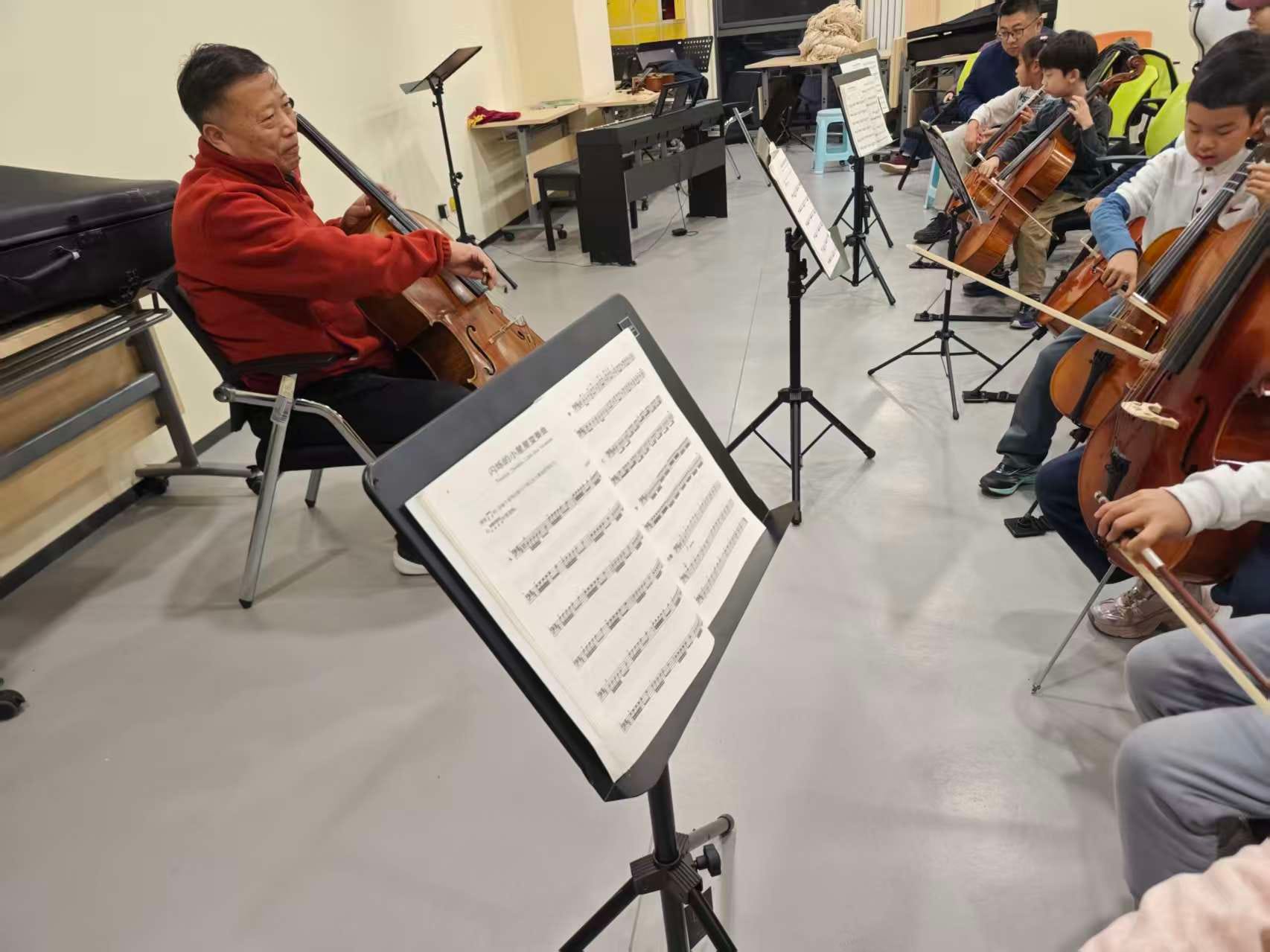
The cello class is progressing even faster—not only has everyone completed "Twinkle Twinkle Little Star," they have also come up with several rhythmic variation ways of playing it. The same piece, with a different rhythm, feels completely different, and the children practice with great enthusiasm.
But in that day's class, what everyone remembered most was an accident.
 · · ·
A violin that slipped off a chair
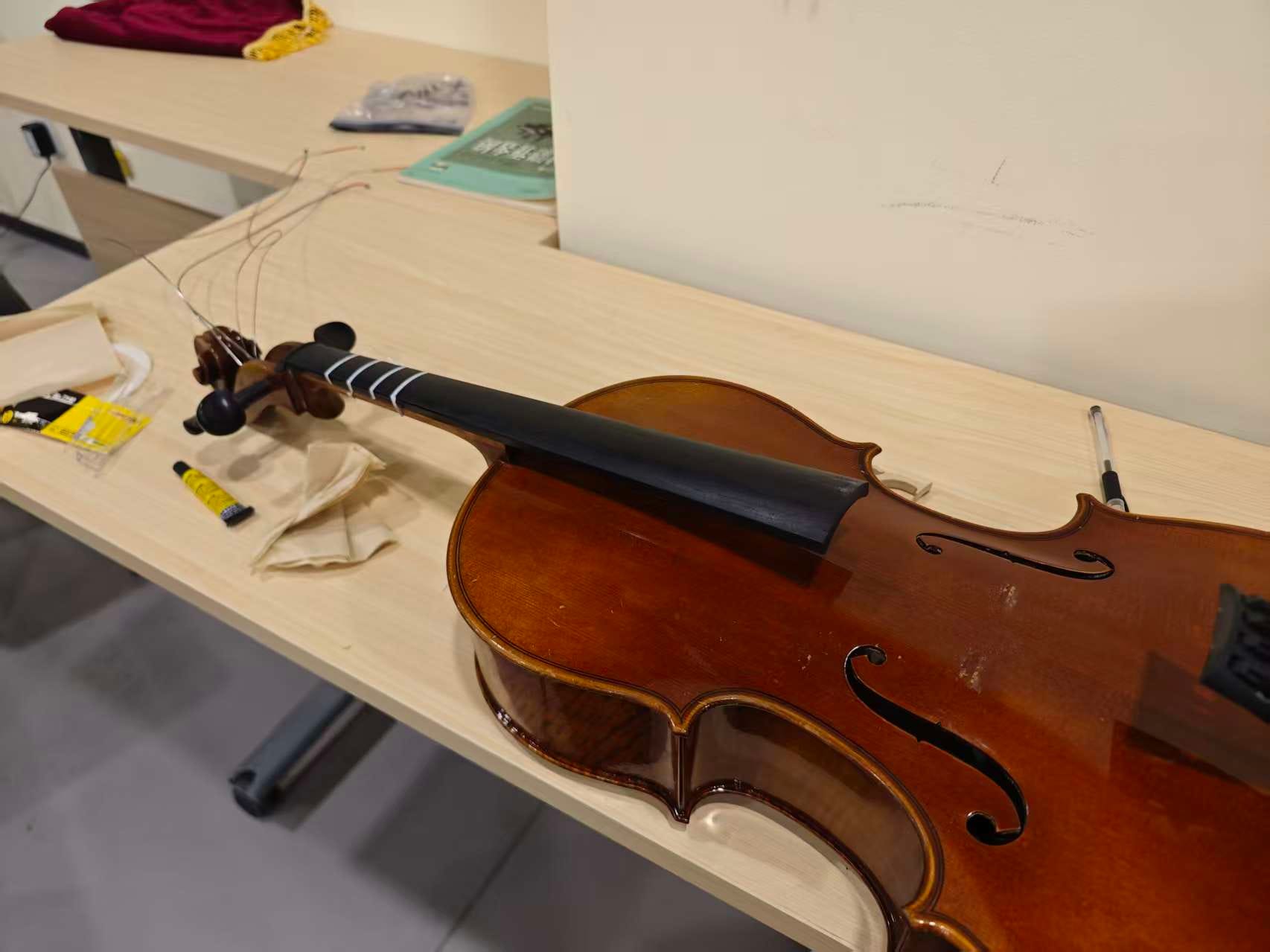
A student's cello accidentally fell from a chair, and the fingerboard came right off.
Teacher Tian started repairing it on the spot. Unfortunately, there were no suitable tools at hand, and by the end of class the fingerboard still had not been glued firmly back on.
But in the process of repairing the instrument, everyone made an unexpected discovery—after the summer vacation and the National Day holiday these past few months, this child had grown taller again.
He had been using a 1/8-size instrument, and now it was already too small; it was time to switch to a 1/4-size instrument.
So at the end of the class, the child went home holding a new instrument—one size larger than the one that had broken.
A piece of bad luck turned into good news in the end. And this incident also brought three important lessons to the table.
· · ·
Lesson one: buying an instrument is really unnecessary
Children grow too fast. In a few months, they may need to change instruments—1/8, 1/4, 1/2, 3/4... all the way up to full size.
Every change costs money. And the old instrument traded in is often still very new; selling it brings little money, and keeping it takes up space. This is also why Idyllic Symphony insists on renting instruments throughout the beginner stage: the instrument grows with the child, and whatever size is needed can be swapped in, so parents do not have to pay for "the child growing too fast."
· · ·
Lesson two: when learning an instrument, after-sales service matters more than you would imagine
Instruments come unglued, go out of tune, get bumped, and need size changes and replacement accessories—none of this can be avoided on the path of learning an instrument. It is even more common for children to damage instruments while practicing.
Being able to repair it on the spot this time depended on the orchestra having professionals behind it. And in a scenario like the orchestra's bulk instrument rental, after-sales costs can actually be kept very low—with professional staff, backup instruments, and unified channels, parents do not have to carry the instrument all over town looking for a repair technician when something goes wrong.
When a single family buys an instrument, they can only bear problems on their own; when the orchestra manages things uniformly, costs are lower and efficiency is higher, and the child's practice is not delayed.
 · · ·
Lesson three: the glue on a good instrument is inherently not "strong"
This is probably the most counterintuitive point: an instrument coming unglued does not mean its quality is substandard. On the contrary—the better the instrument, the more likely it is to use weak glue.
The reason lies in the wood. Wood constantly shrinks and expands with the seasons and humidity, and this process cannot be avoided. When this shrinking and swelling accumulates to a certain degree, stress forms inside the body of the instrument. At that point, the glue faces a choice:
If the glue is too strong—the stress has nowhere to go and will tear the wood fibers apart, which is irreversible damage.
If the glue is not so strong—the stress will first break at the glued joint, and the wood itself is protected instead.
So coming unglued is actually the instrument's self-protection mechanism. Luthiers could absolutely use modern chemical adhesives to glue an instrument rock solid, but they do not do so. They would rather choose a glue that "fails first" and preserve the wood. Because an instrument that will not stay glued can be reglued, but wood that has been torn apart can never go back.
For this reason, the glue luthiers use today is almost no different from that of 300 years ago—it is the most traditional, not particularly strong animal glue. This is true of instruments worth millions, and it is also true of the practice instruments in children's hands.
Coming unglued is something everyone who uses an instrument must get used to facing. It is not a defect of the instrument, but a part of the instrument. Next time an instrument comes unglued, there is no need to worry—just give it to a professional to glue back together.
· · ·
An instrument that dropped its fingerboard brought out three lessons: renting is better than buying, after-sales service matters more than the instrument itself, and coming unglued is normal rather than a defect.
These principles are not taught in textbooks, but they are exactly the everyday realities that every family of a young string player will truly encounter. What the public welfare orchestra can do is step into these pitfalls in advance on everyone's behalf and solve these problems ahead of time, so that children only need to practice with peace of mind.
Idyllic Symphony Youth Public Welfare Orchestra
Huilongguan Jinyu International Community Teaching Site
October 23, 2026
Idyllic Symphony Youth Public Welfare Orchestra · Let good music enter every home
At this rate, there is hope that by the end of the year they can share a stage with the violin class from Beiyuan Subdistrict.
The cello class is progressing even faster—not only has everyone completed "Twinkle Twinkle Little Star," they have also come up with several rhythmic variation ways of playing it. The same piece, with a different rhythm, feels completely different, and the children practice with great enthusiasm.
But in that day's class, what everyone remembered most was an accident.
· · ·
A violin that slipped off a chair
A student's cello accidentally fell from a chair, and the fingerboard came right off.
Teacher Tian started repairing it on the spot. Unfortunately, there were no suitable tools at hand, and by the end of class the fingerboard still had not been glued firmly back on.
But in the process of repairing the instrument, everyone made an unexpected discovery—after the summer vacation and the National Day holiday these past few months, this child had grown taller again.
He had been using a 1/8-size instrument, and now it was already too small; it was time to switch to a 1/4-size instrument.
So at the end of the class, the child went home holding a new instrument—one size larger than the one that had broken.
A piece of bad luck turned into good news in the end. And this incident also brought three important lessons to the table.
· · ·
Lesson one: buying an instrument is really unnecessary
Children grow too fast. In a few months, they may need to change instruments—1/8, 1/4, 1/2, 3/4... all the way up to full size.
Every change costs money. And the old instrument traded in is often still very new; selling it brings little money, and keeping it takes up space. This is also why Idyllic Symphony insists on renting instruments throughout the beginner stage: the instrument grows with the child, and whatever size is needed can be swapped in, so parents do not have to pay for "the child growing too fast."
· · ·
Lesson two: when learning an instrument, after-sales service matters more than you would imagine
Instruments come unglued, go out of tune, get bumped, and need size changes and replacement accessories—none of this can be avoided on the path of learning an instrument. It is even more common for children to damage instruments while practicing.
Being able to repair it on the spot this time depended on the orchestra having professionals behind it. And in a scenario like the orchestra's bulk instrument rental, after-sales costs can actually be kept very low—with professional staff, backup instruments, and unified channels, parents do not have to carry the instrument all over town looking for a repair technician when something goes wrong.
When a single family buys an instrument, they can only bear problems on their own; when the orchestra manages things uniformly, costs are lower and efficiency is higher, and the child's practice is not delayed.
· · ·
Lesson three: the glue on a good instrument is inherently not "strong"
This is probably the most counterintuitive point: an instrument coming unglued does not mean its quality is substandard. On the contrary—the better the instrument, the more likely it is to use weak glue.
The reason lies in the wood. Wood constantly shrinks and expands with the seasons and humidity, and this process cannot be avoided. When this shrinking and swelling accumulates to a certain degree, stress forms inside the body of the instrument. At that point, the glue faces a choice:
If the glue is too strong—the stress has nowhere to go and will tear the wood fibers apart, which is irreversible damage.
If the glue is not so strong—the stress will first break at the glued joint, and the wood itself is protected instead.
So coming unglued is actually the instrument's self-protection mechanism. Luthiers could absolutely use modern chemical adhesives to glue an instrument rock solid, but they do not do so. They would rather choose a glue that "fails first" and preserve the wood. Because an instrument that will not stay glued can be reglued, but wood that has been torn apart can never go back.
For this reason, the glue luthiers use today is almost no different from that of 300 years ago—it is the most traditional, not particularly strong animal glue. This is true of instruments worth millions, and it is also true of the practice instruments in children's hands.
Coming unglued is something everyone who uses an instrument must get used to facing. It is not a defect of the instrument, but a part of the instrument. Next time an instrument comes unglued, there is no need to worry—just give it to a professional to glue back together.
· · ·
An instrument that dropped its fingerboard brought out three lessons: renting is better than buying, after-sales service matters more than the instrument itself, and coming unglued is normal rather than a defect.
These principles are not taught in textbooks, but they are exactly the everyday realities that every family of a young string player will truly encounter. What the public welfare orchestra can do is step into these pitfalls in advance on everyone's behalf and solve these problems ahead of time, so that children only need to practice with peace of mind.
Idyllic Symphony Youth Public Welfare Orchestra
Huilongguan Jinyu International Community Teaching Site
October 23, 2026
Idyllic Symphony Youth Public Welfare Orchestra · Let good music enter every home